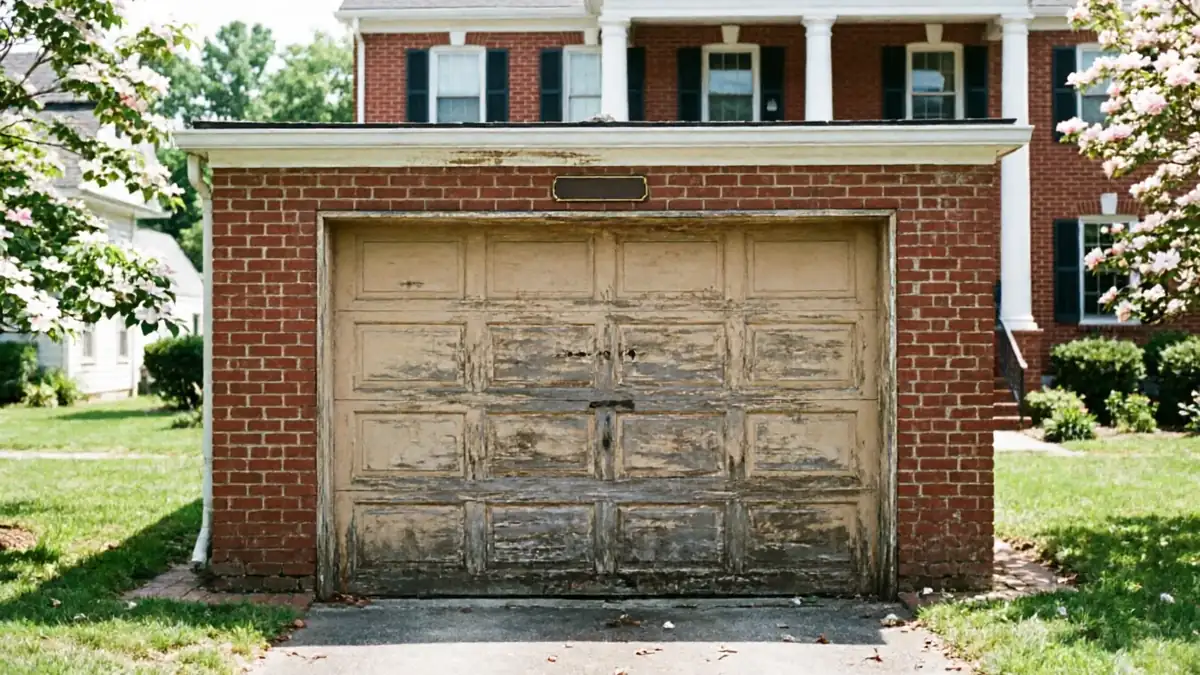
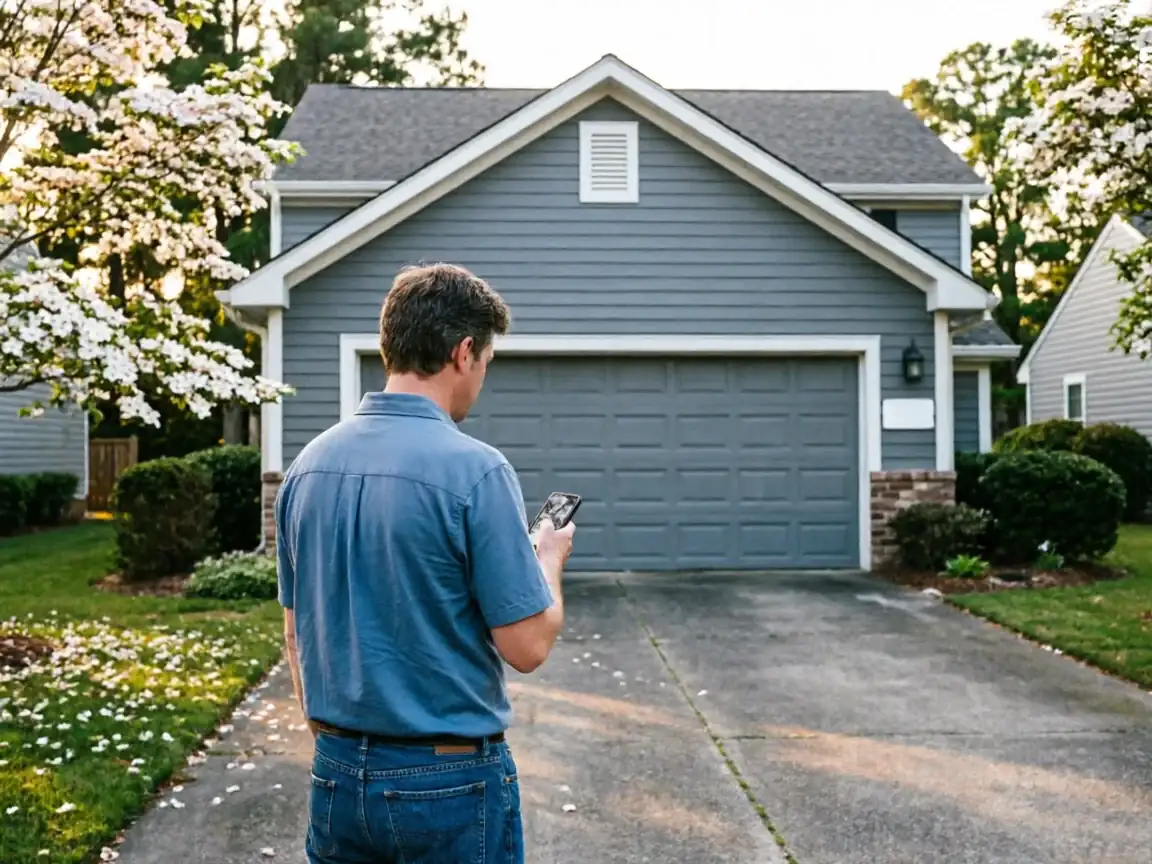
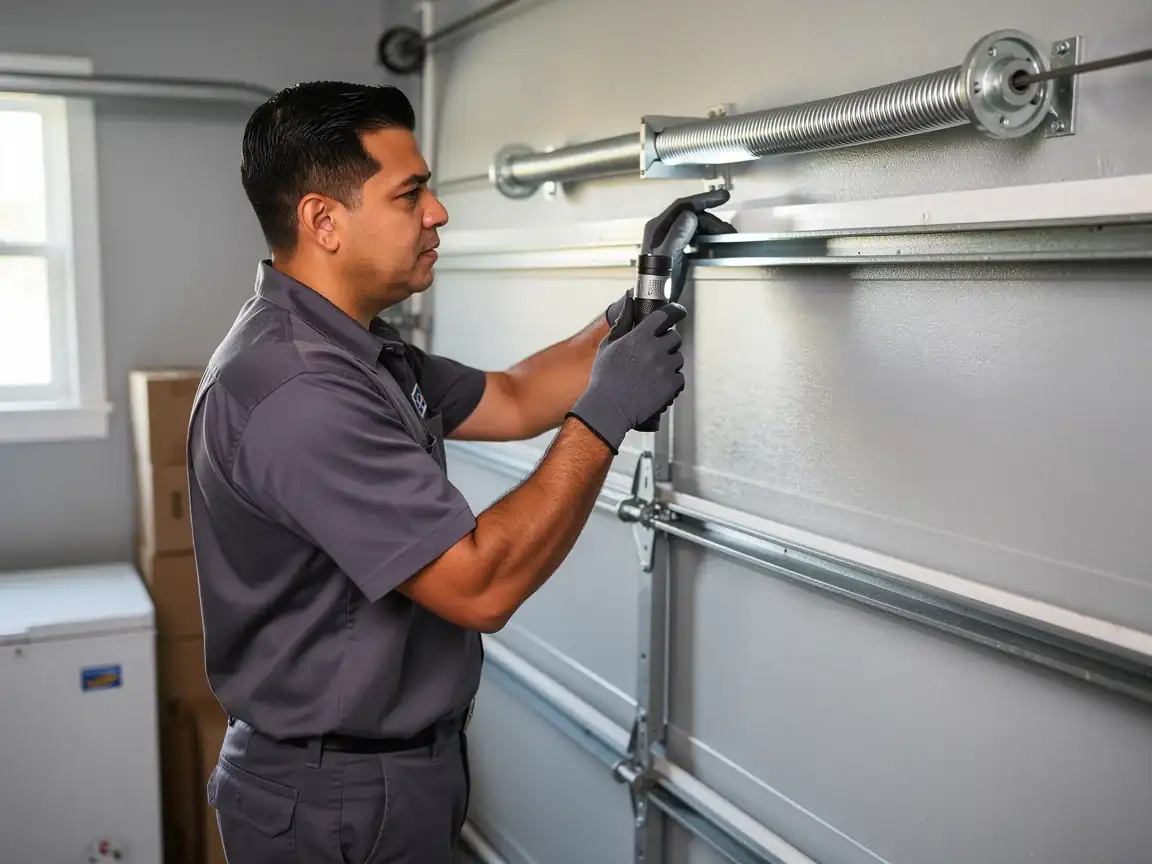
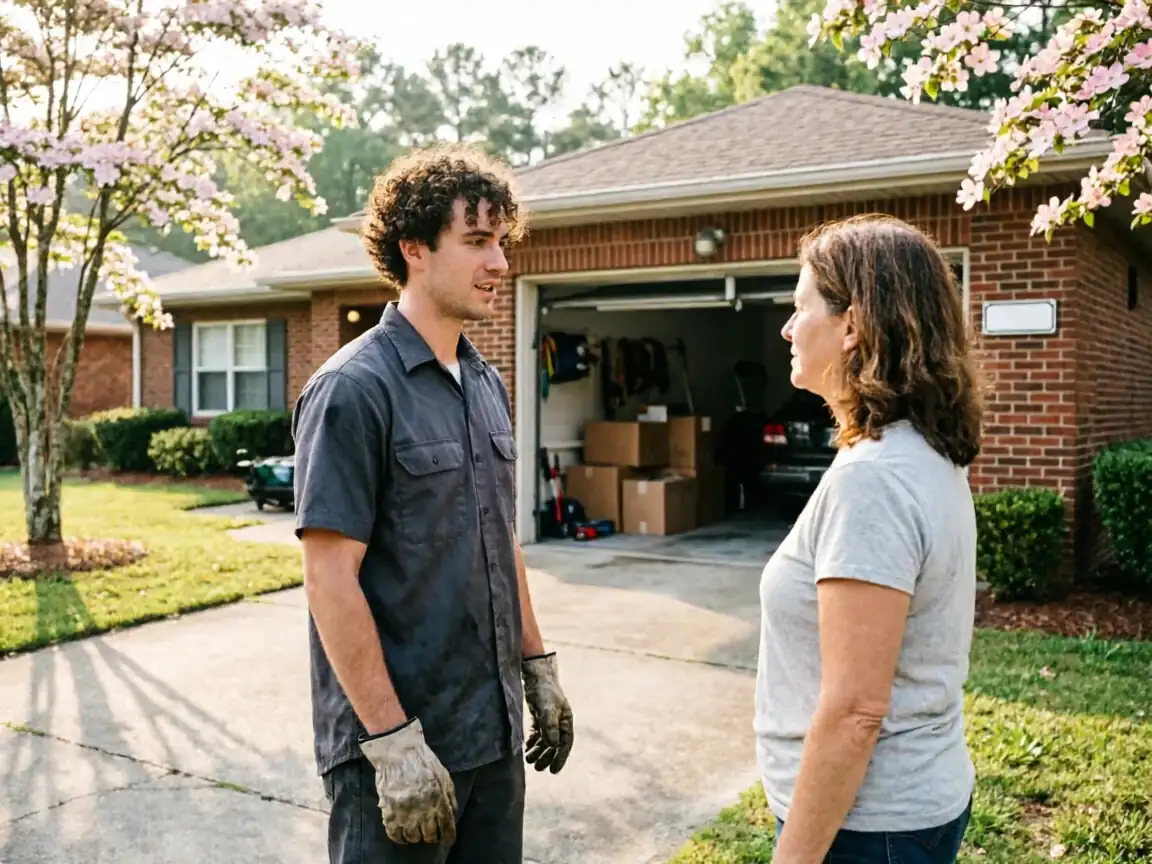
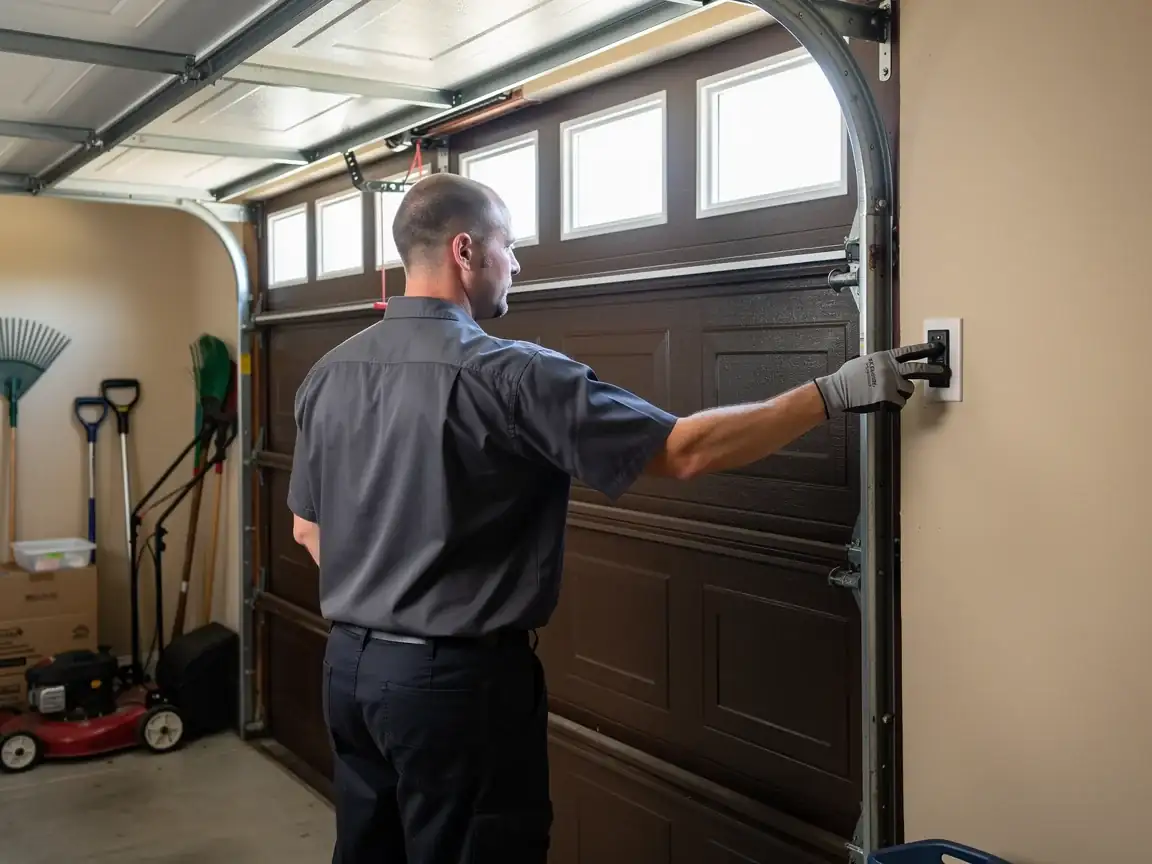
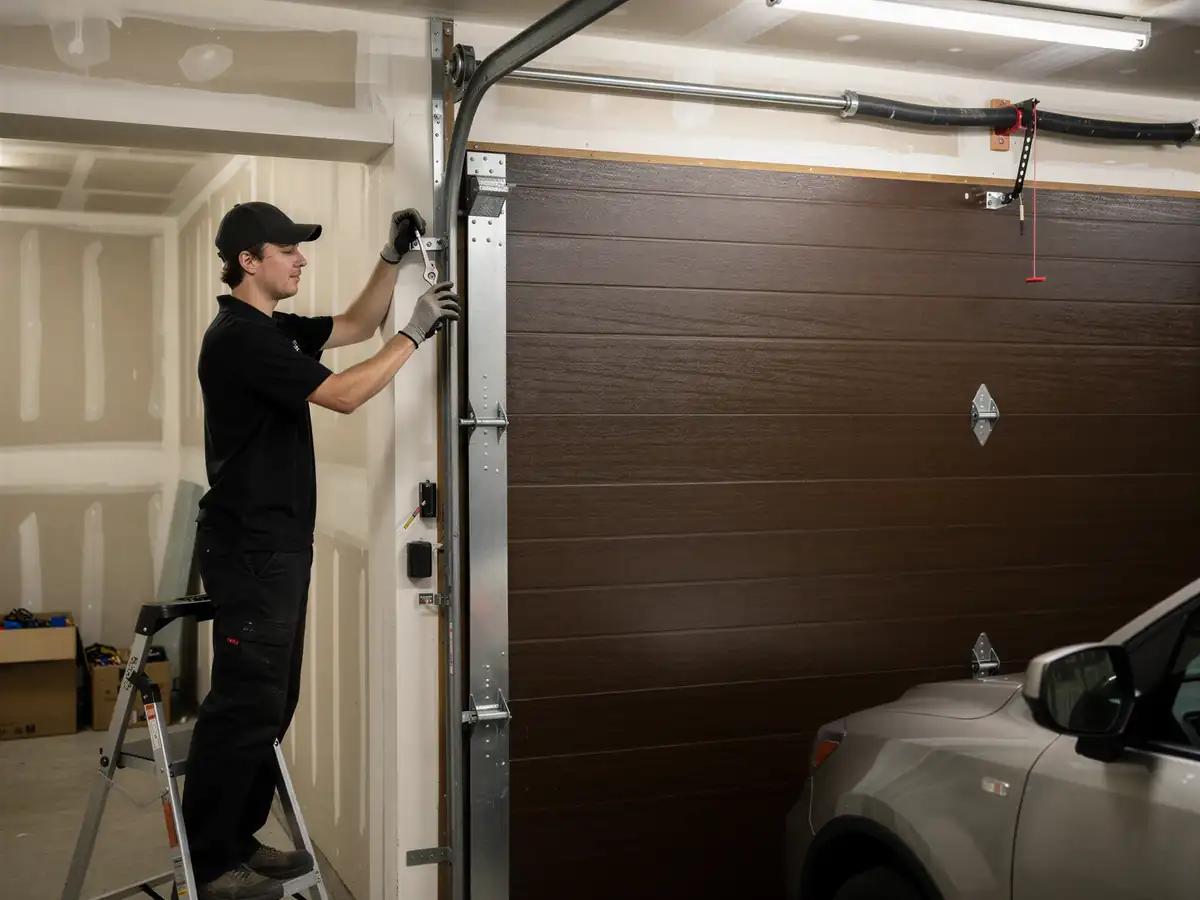
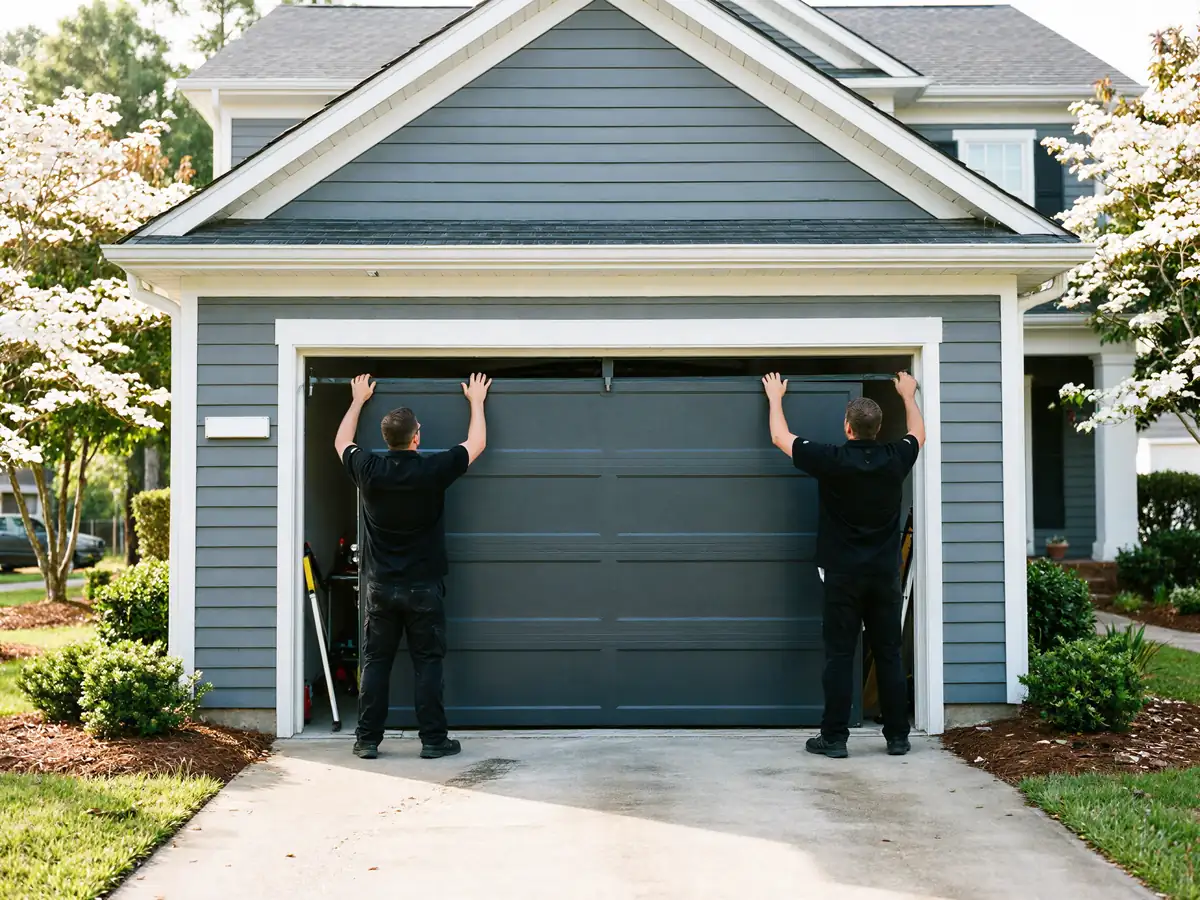
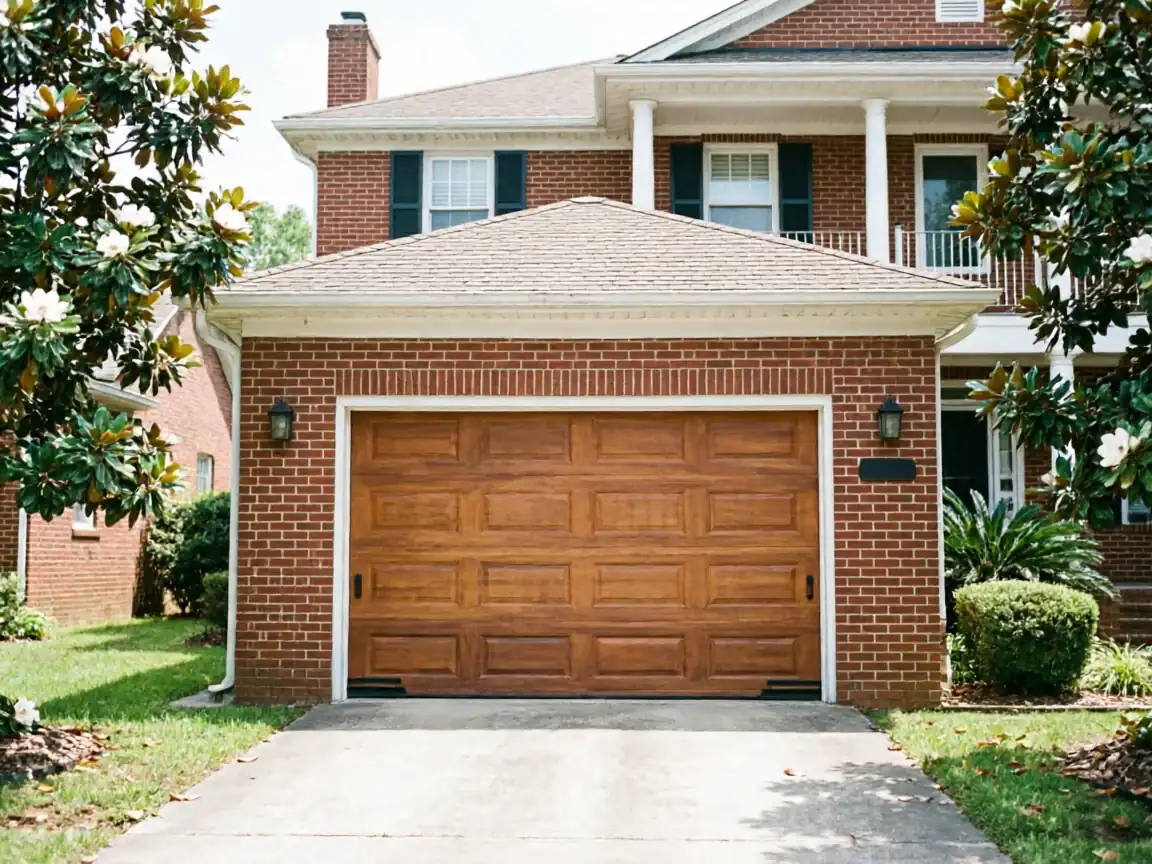
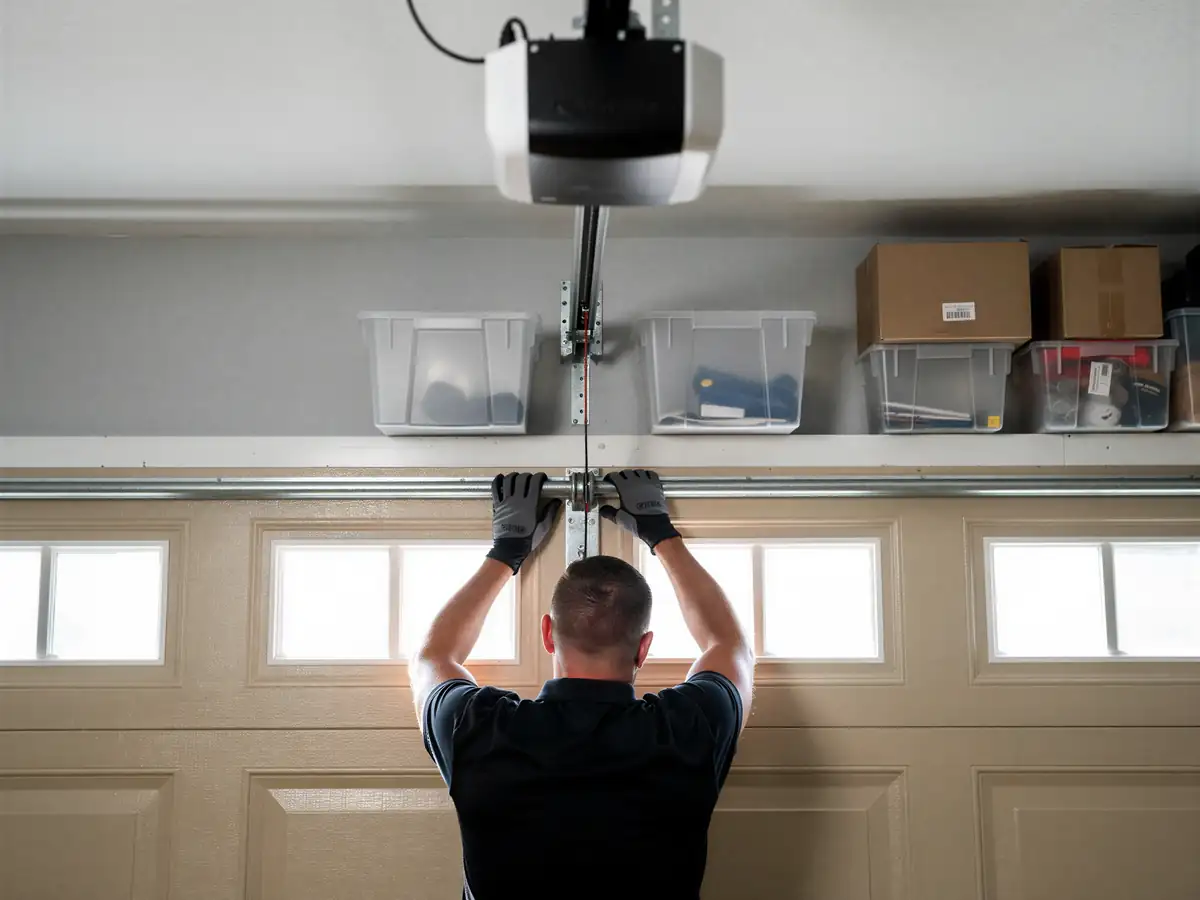
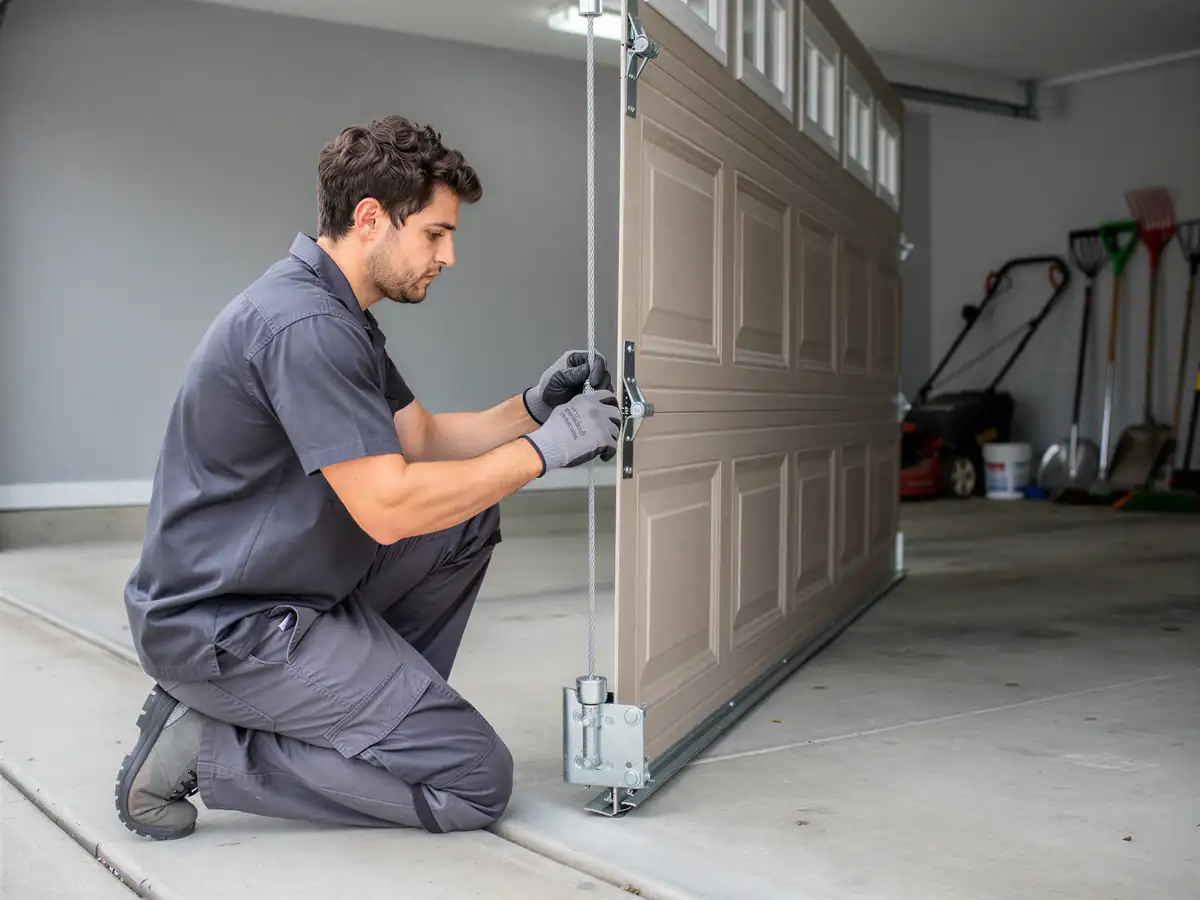
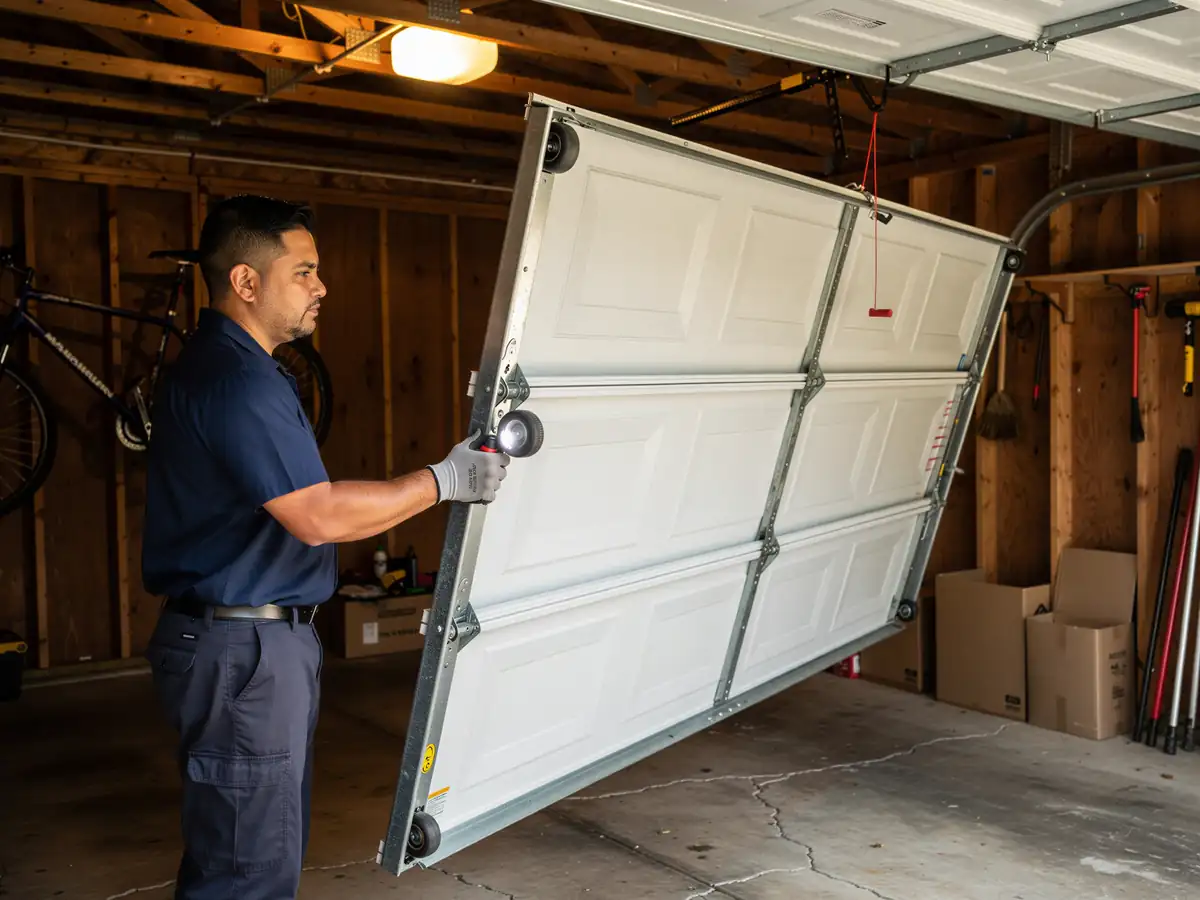
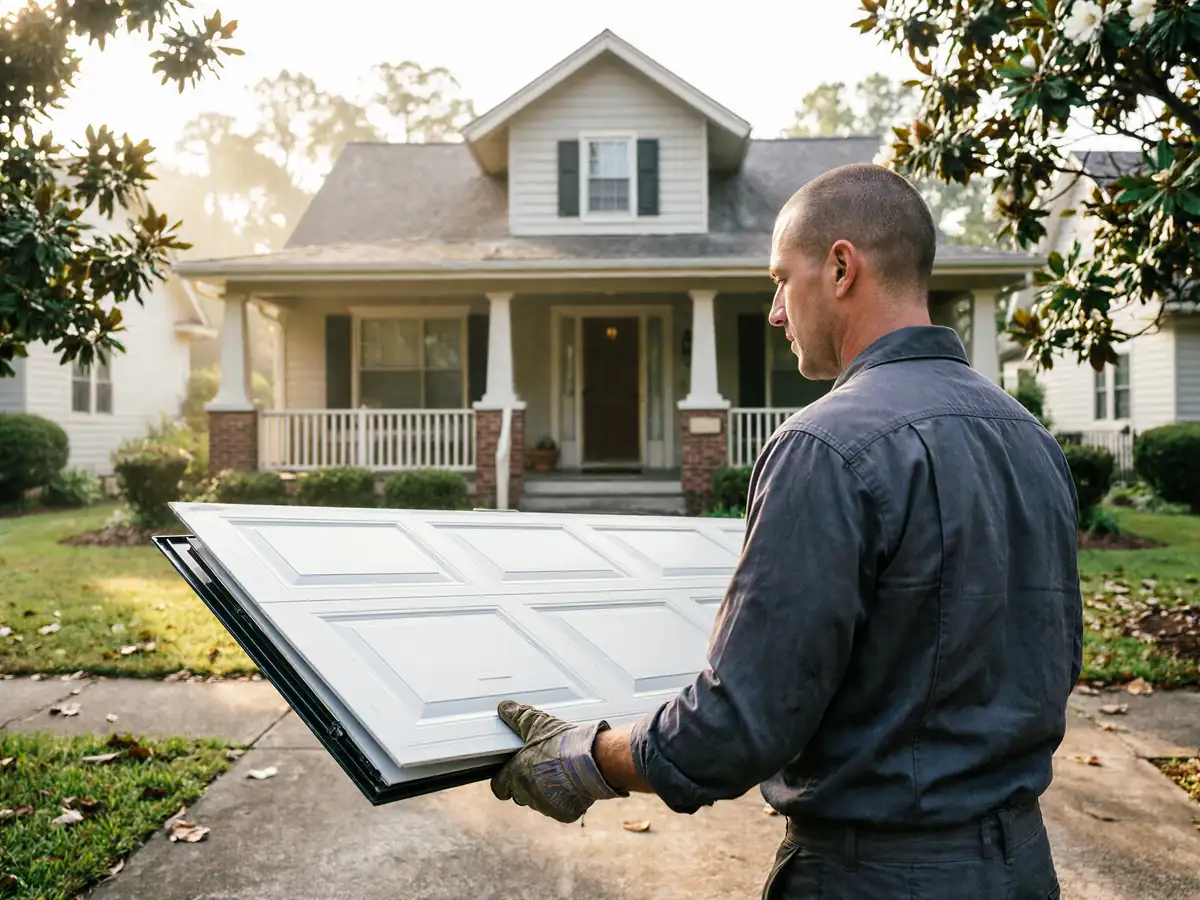
The mistake we see most in this area is homeowners treating every garage door problem as a replacement decision, or the opposite - throwing parts at a door that's already past the point where parts matter. Columbia's housing stock runs mostly 1965 to 2010, with a median build year around 1979, and that one fact changes the math. A door installed when the house went up in 1979 is pushing 45 years old. The track, the hinges, and the springs on that door are almost never original anymore - they've been replaced piecemeal over decades by whoever owned the house before you. The common mistake is assuming the door panel itself has the same age and condition as the hardware bolted to it. Sometimes the panel is the newest part. Sometimes it's the oldest and weakest link holding together hardware from three different decades. You can't tell which situation you're in by looking at the door from the driveway. It takes pulling the panel off true, checking the track for rust pitting, and seeing whether the spring is an original torsion unit or a retrofit. Skip that step and you either replace a door that had another ten years in it, or you sink money into a spring and opener on a frame that's already racking.
What the Weather Here Does to It
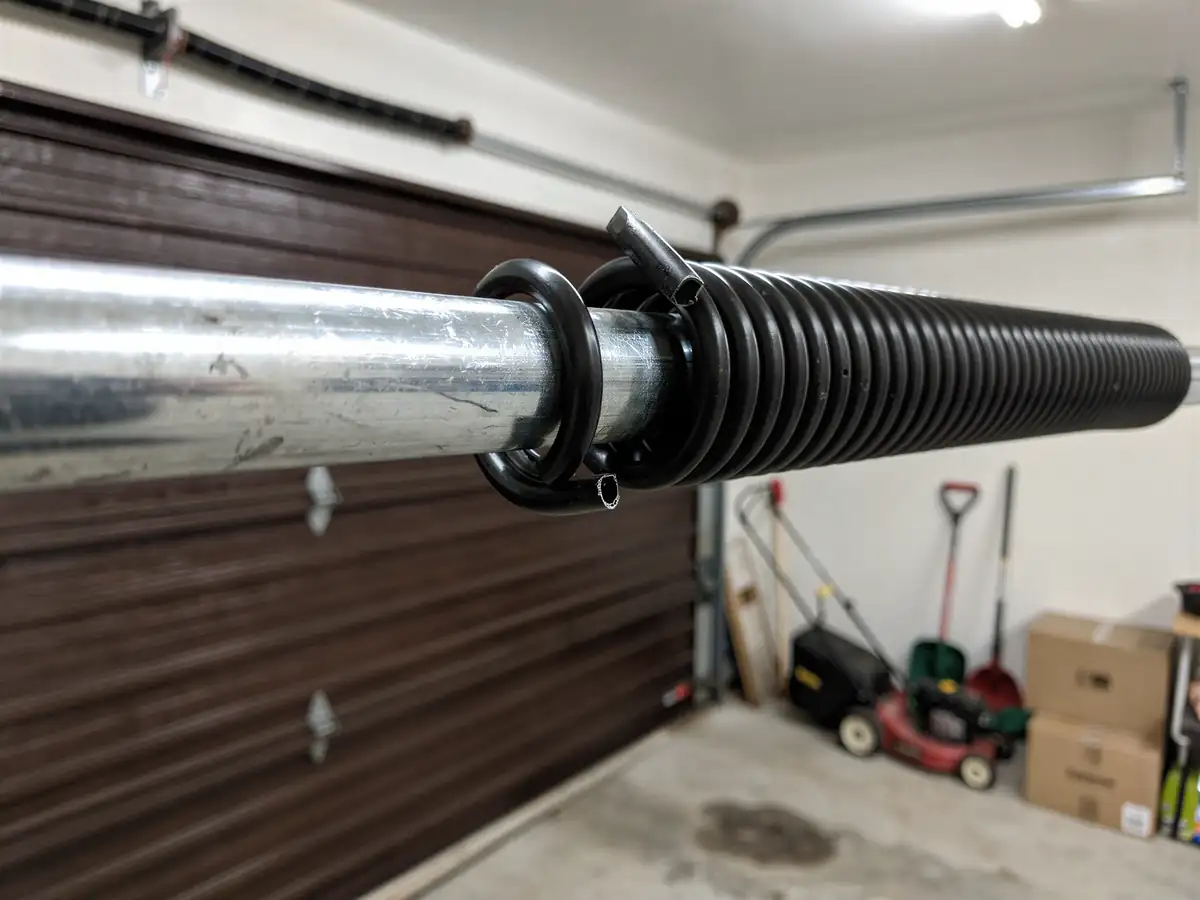
Columbia sits in a cold-moderate climate band, which means the garage door hardware here deals with freeze-thaw cycling rather than brutal sustained cold or desert heat. That matters for older doors specifically. A torsion spring or track installed in the 1970s or 80s has gone through decades of metal contracting in winter and expanding in summer, and that cycling is what fatigues steel - not any single storm. On a house from that 1965-2010 build window, the garage is often the least insulated, least climate-controlled room attached to the house, so the door assembly takes the full swing of outdoor temperature with no buffer. That's why a 40-year-old torsion spring here is more likely to be near the end of its cycle count than a spring of the same age in a milder, more stable climate. It's not dramatic weather damage, it's slow fatigue, and it's exactly why an older door that still looks fine can snap a cable or spring without warning on an ordinary morning.
The Situation
Most of the work we do is in neighborhoods built in that 1960s-70s wave - the stock that makes up the bulk of the roughly 18 named areas across this service area, from close-in spots like Woodfield two miles out to farther ones like Ridgeway and Gaston at the 19-mile mark. The doors in these houses were built for a different era of garage use - single opener, lighter panel, steel hardware sized for a lighter door than what gets installed today. When one of these doors is still running on its original track alignment and the panel isn't dented or delaminating, it's often worth repairing: a new spring, new rollers, a cable replacement. The frame and track geometry on these older setups is simple and the parts are not exotic. Where it stops being worth fixing is when the track itself has rusted through or bent, or when the panel has water damage at the bottom - common on doors that have sat low to grade for 40-plus years. At that point you're chasing a door that will keep failing in new spots every six months.
When Waiting Is Fine
Not every noise or stiff spot needs a same-week call. If a door from that 1970s-80s stock is still opening and closing on its track without binding, and the spring hasn't broken, a little roughness in the motion is often just old grease and worn rollers - something that can wait for a scheduled visit rather than an emergency one. We'll say plainly: we don't do same-day emergency dispatch, so if a spring does let go and the door is stuck down, plan around our next available slot rather than expecting a rush truck. That's worth knowing before it happens, not after. Waiting is also fine if the only issue is cosmetic - faded paint, a dented bottom panel that still seals - on a door that's structurally sound. Where you shouldn't wait is a frayed cable or a spring with a visible gap in the coil, since those fail without warning and can let the door drop.
How it works
From “it’s stuck” to “it’s fixed”
01
Tell us what’s wrong
Describe the symptom - won’t open, loud bang, opener runs but the door won’t move.
02
On-site diagnosis
A technician tests the door under power and by hand and finds what actually failed.
03
Clear, up-front plan
You get the fix that’s needed and what drives the cost - before any work starts.
04
Repaired & tested
The repair is done, the door is set true and tested, and the work area left clean.
Not sure which repair your door needs in Columbia, SC? Describe what it’s doing - every job starts with a diagnosis.
How do I know if my garage door is original to the house?
If your Columbia house was built in that 1965-2010 window with a median around 1979, check the spring and track hardware for a manufacture stamp or date code. Most original torsion springs from that era have long since been swapped at least once, so an original door panel with newer hardware underneath is common and usually still worth repairing.
Why does my old spring keep breaking faster than it used to?
In Columbia's cold-moderate climate, torsion springs go through repeated freeze-thaw expansion and contraction every year, which fatigues the steel over decades. A 40-year-old spring has absorbed more of that cycling than a newer one, so it's closer to its lifetime cycle count even if it looks fine.
Is it worth replacing just the track on an older door?
Often, yes. On houses from the 1960s-70s stock common across this area, the track geometry is simple and parts aren't hard to source. If the panel itself is sound and only the track has rusted or come out of alignment, replacing the track alone is usually cheaper than a full door swap.
Do you offer same-day repair if a spring breaks?
No, we don't run same-day emergency dispatch. If your spring breaks and the door is stuck, we'll get you on the next available slot, but plan on scheduling rather than a rush visit the same day it happens.