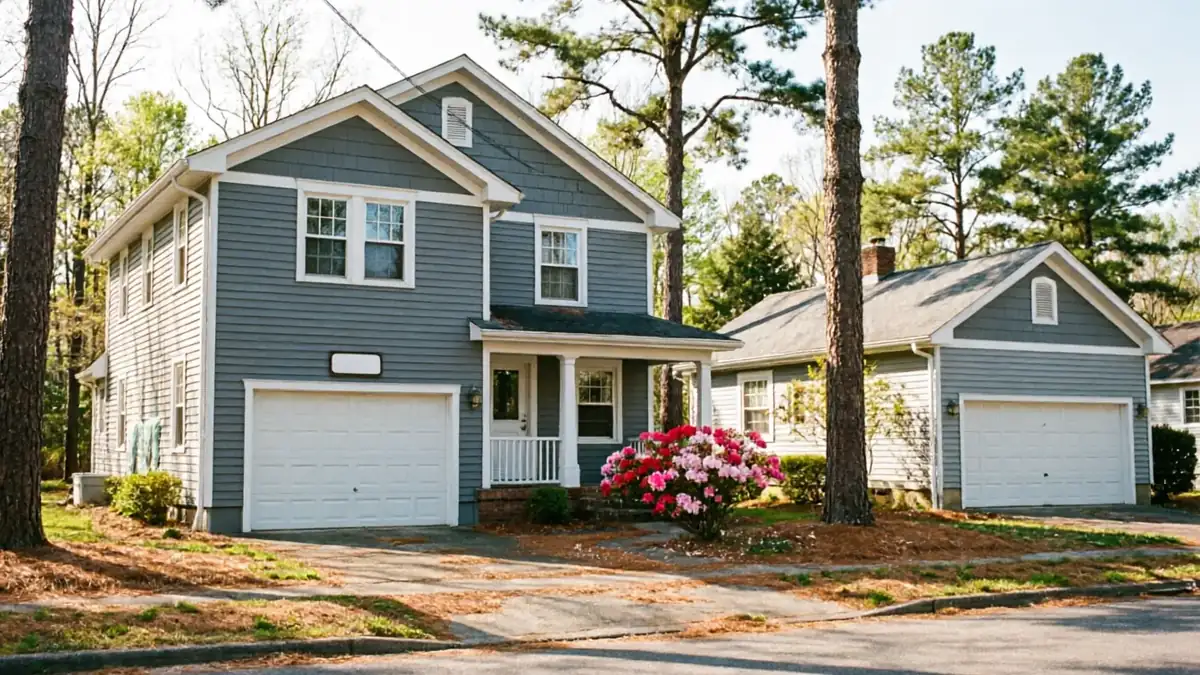
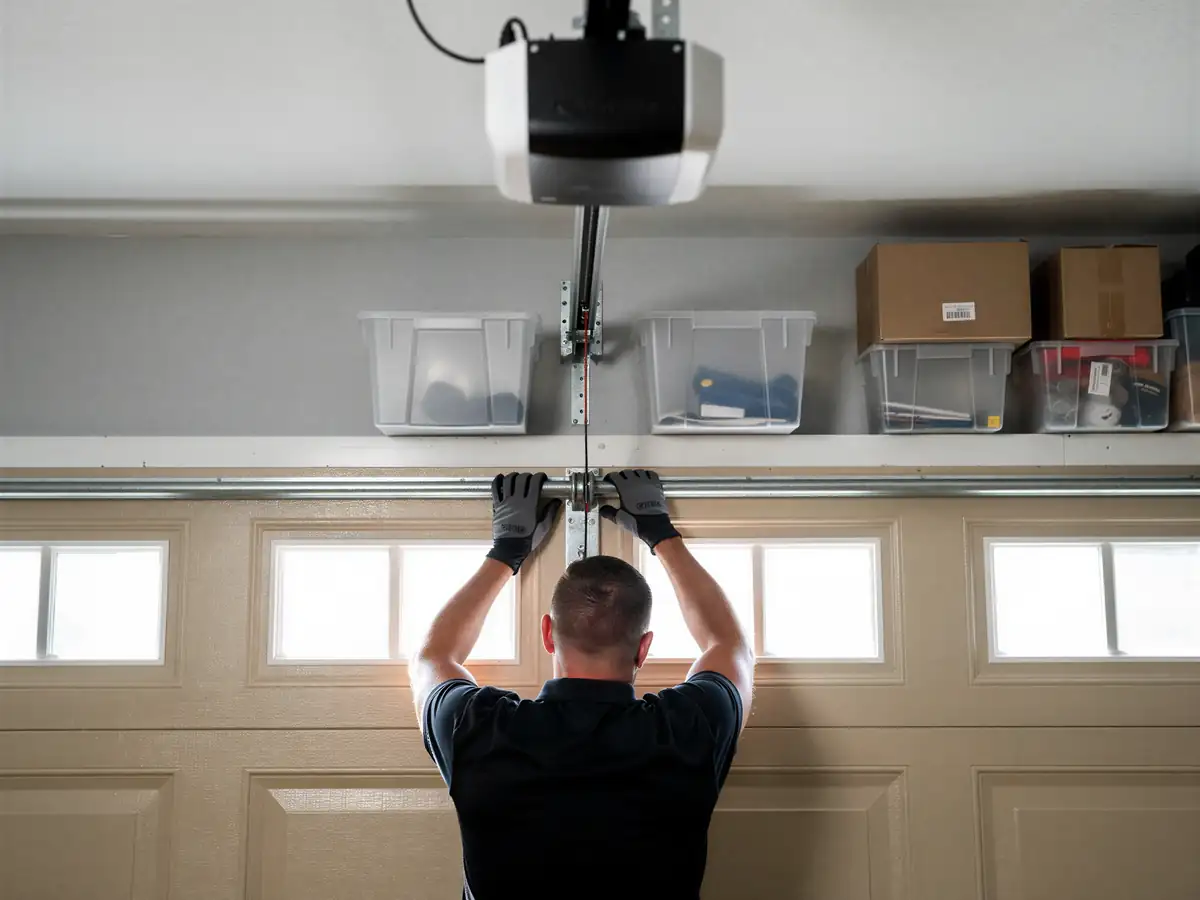
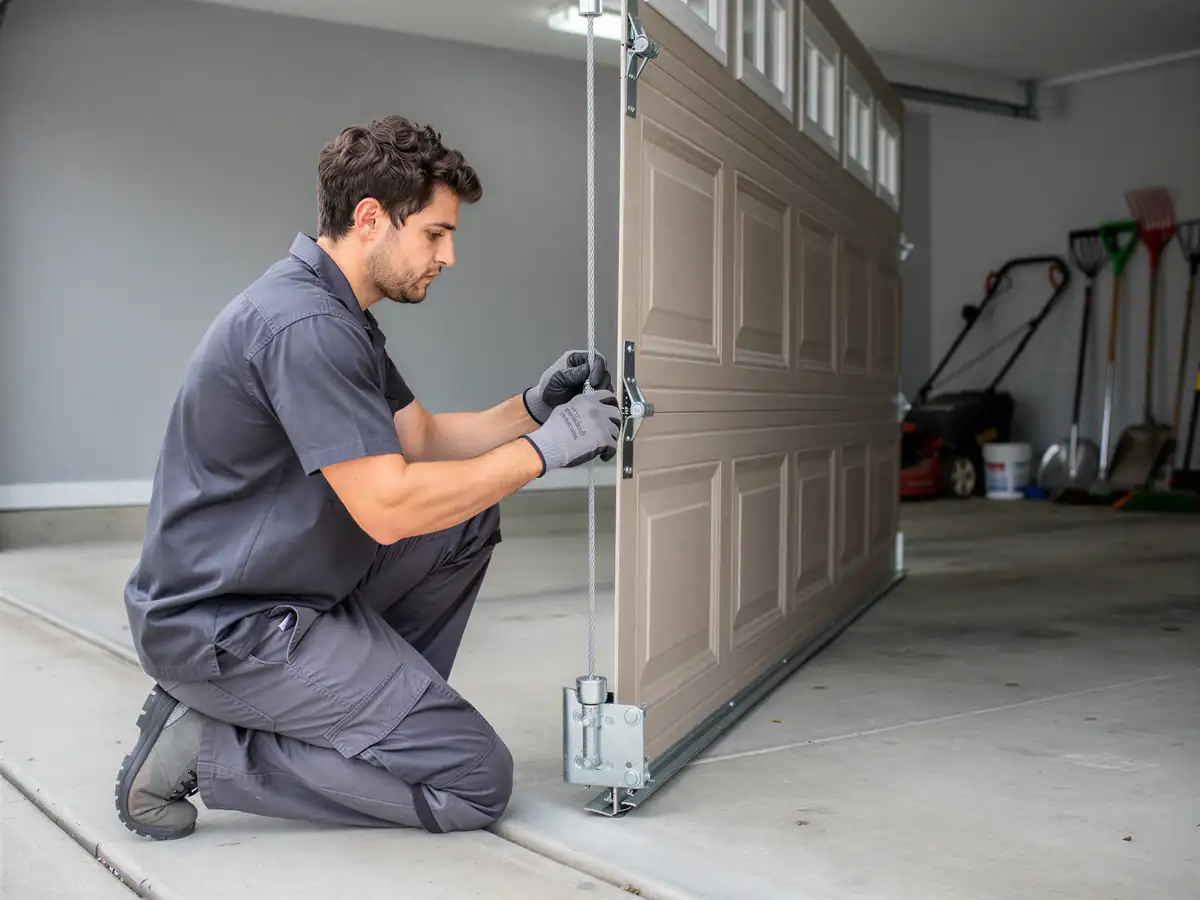
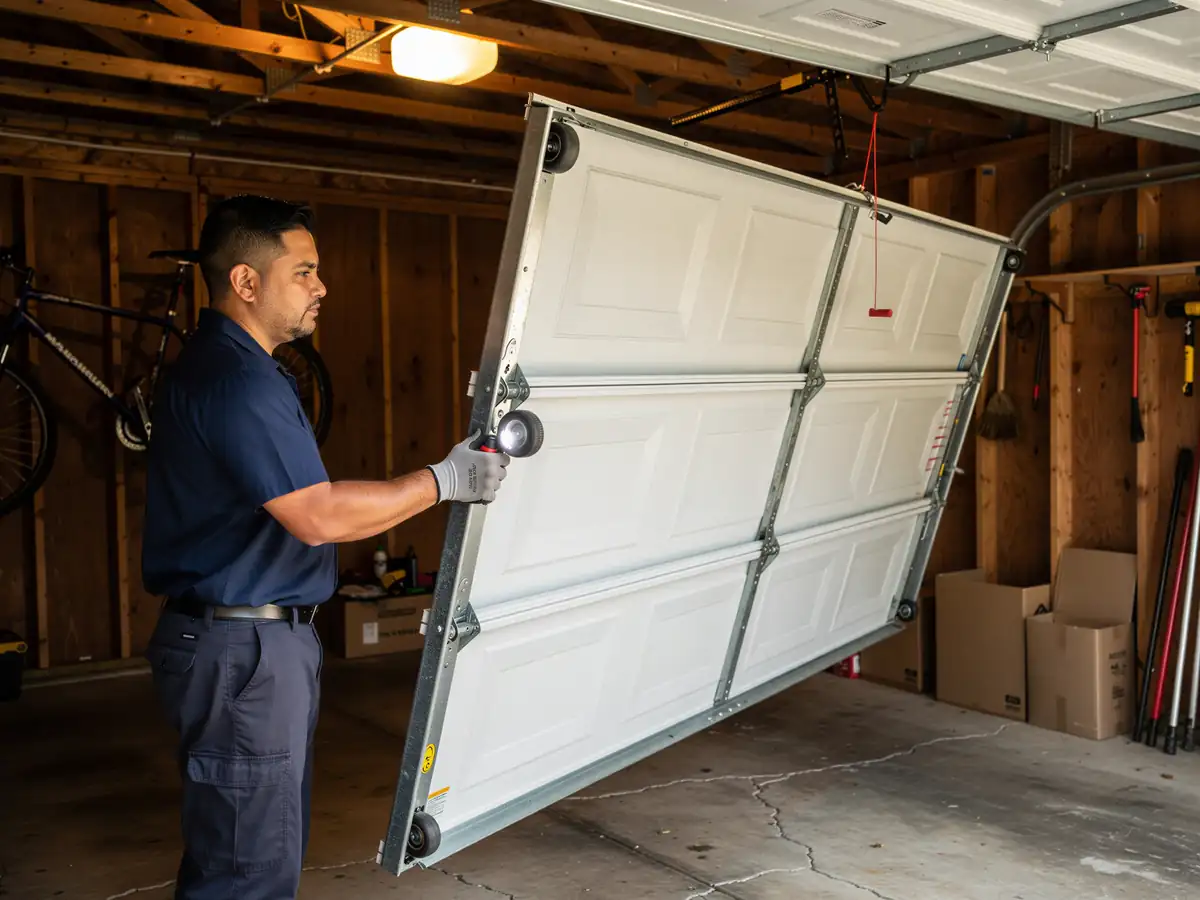
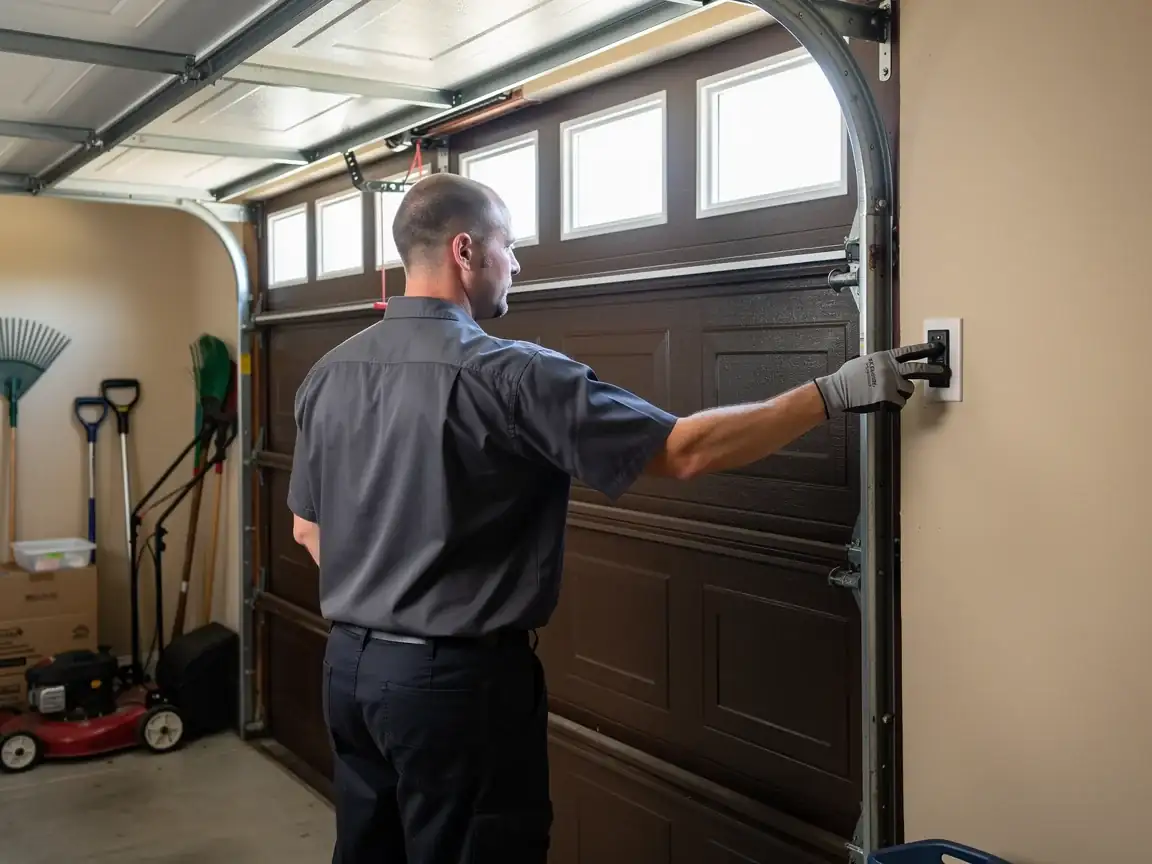
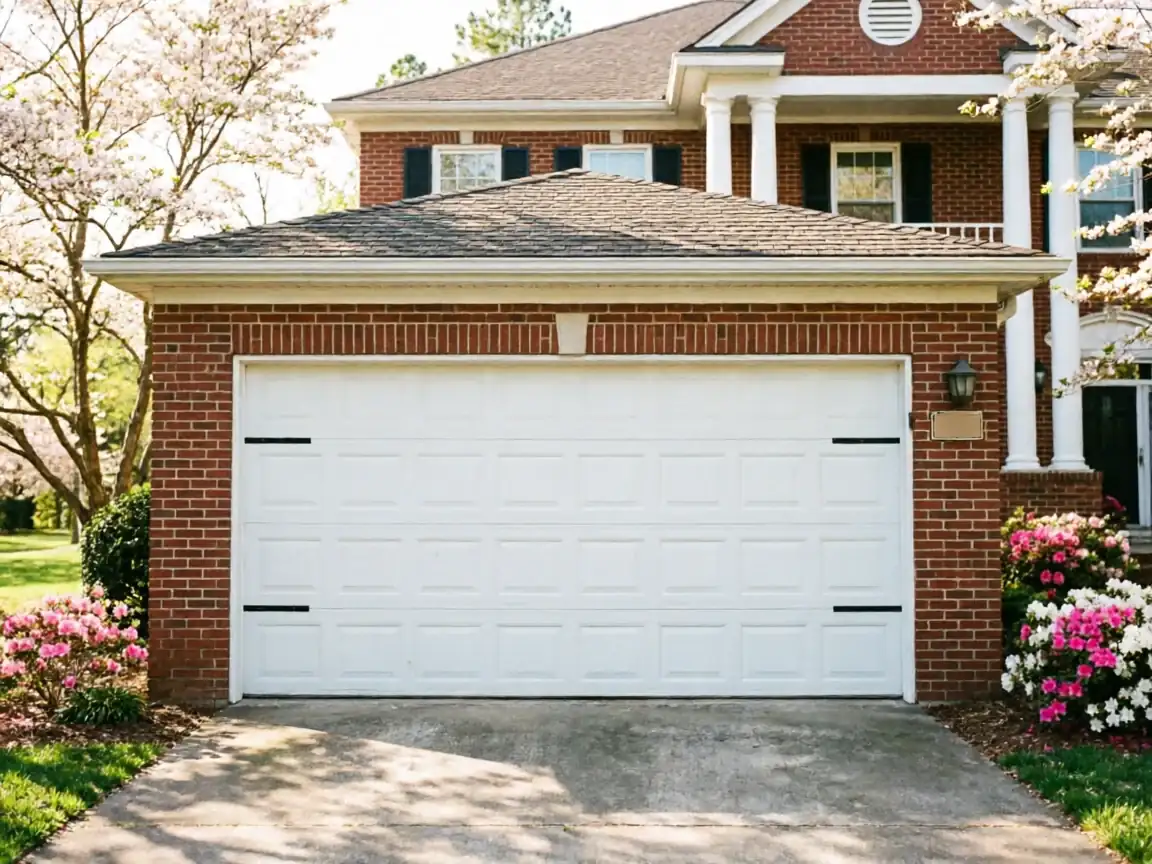
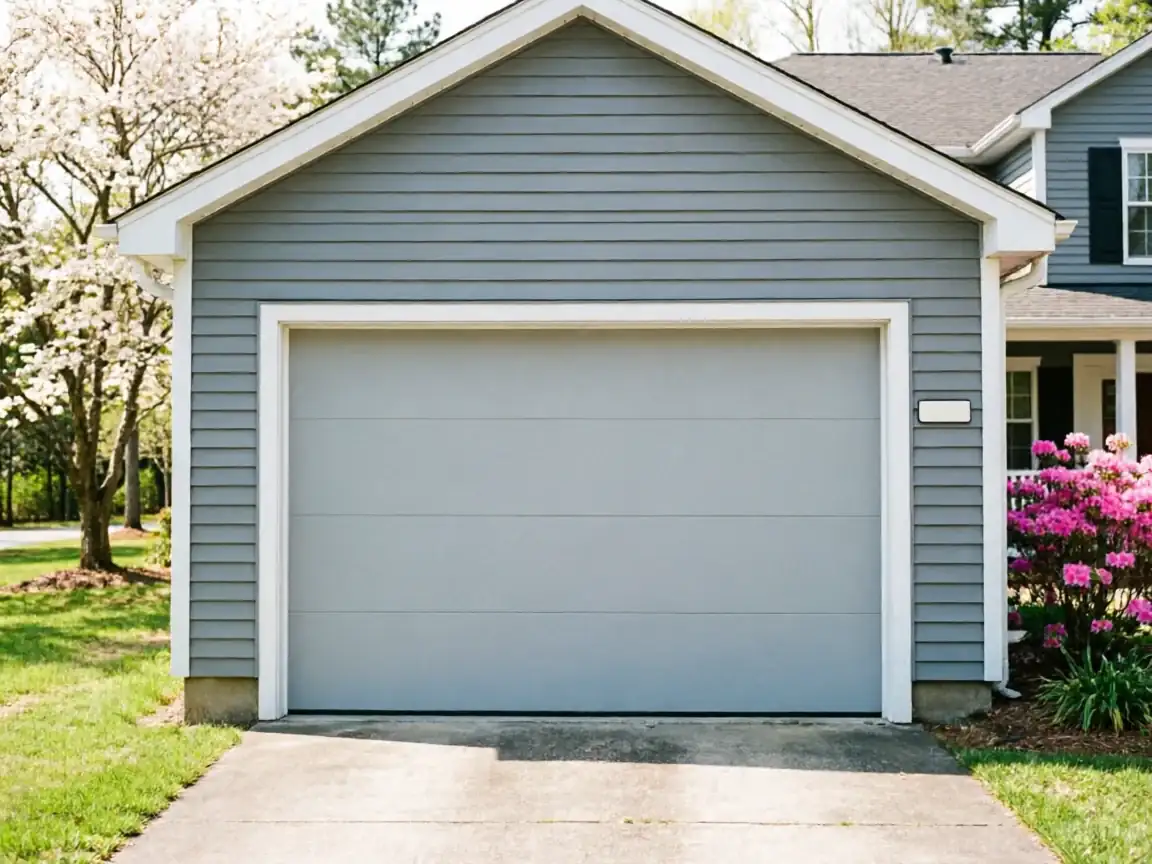
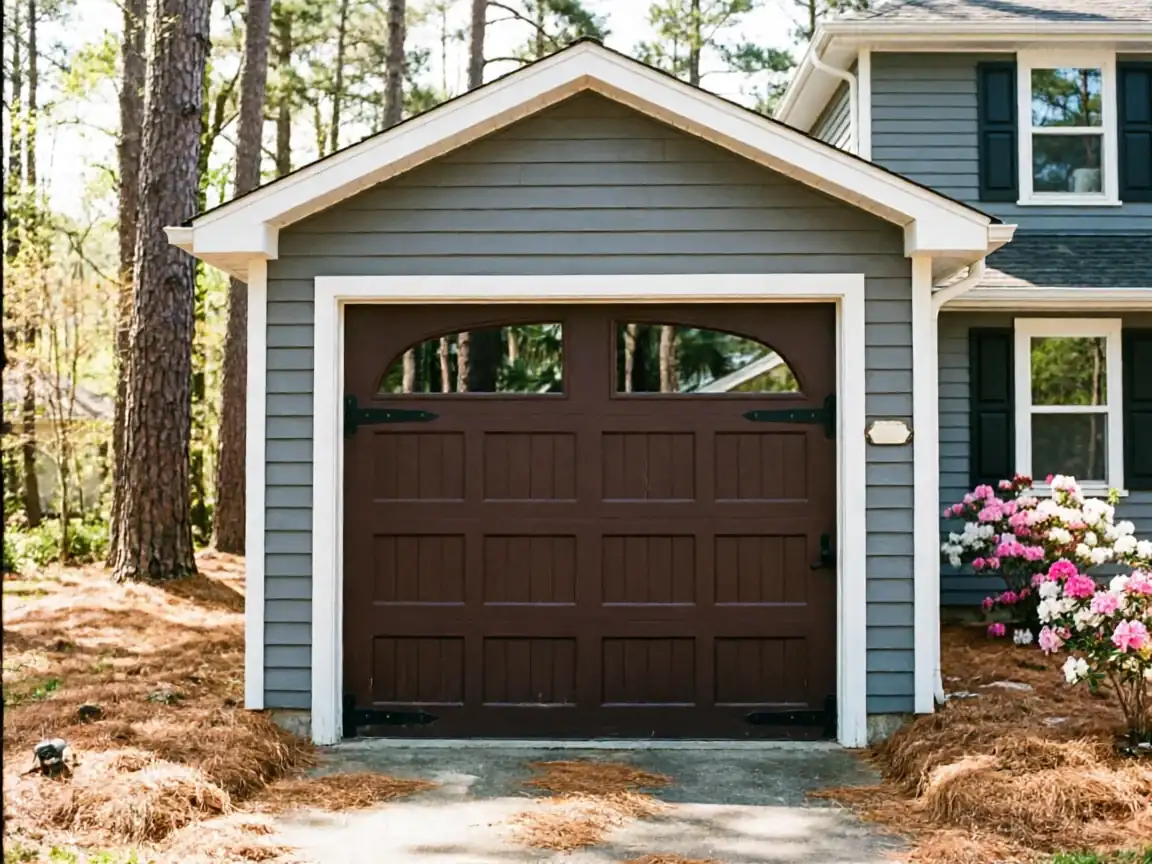
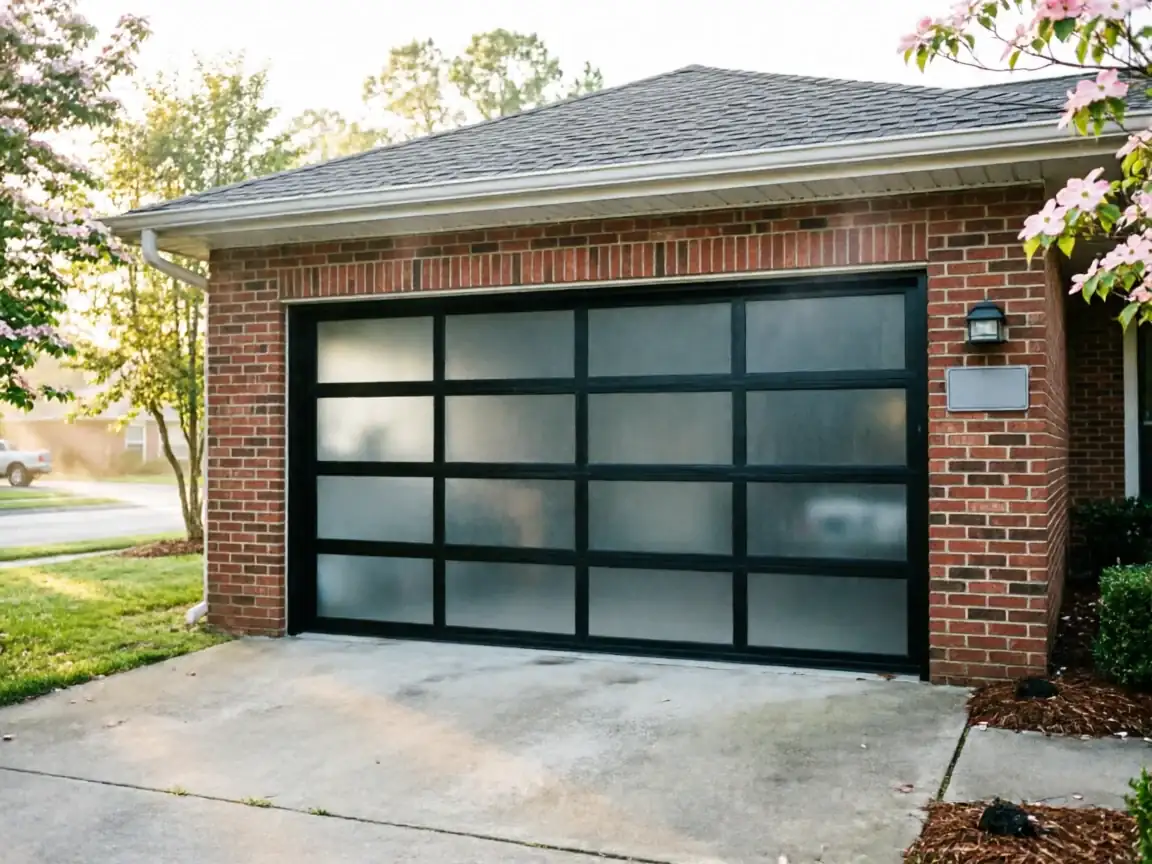
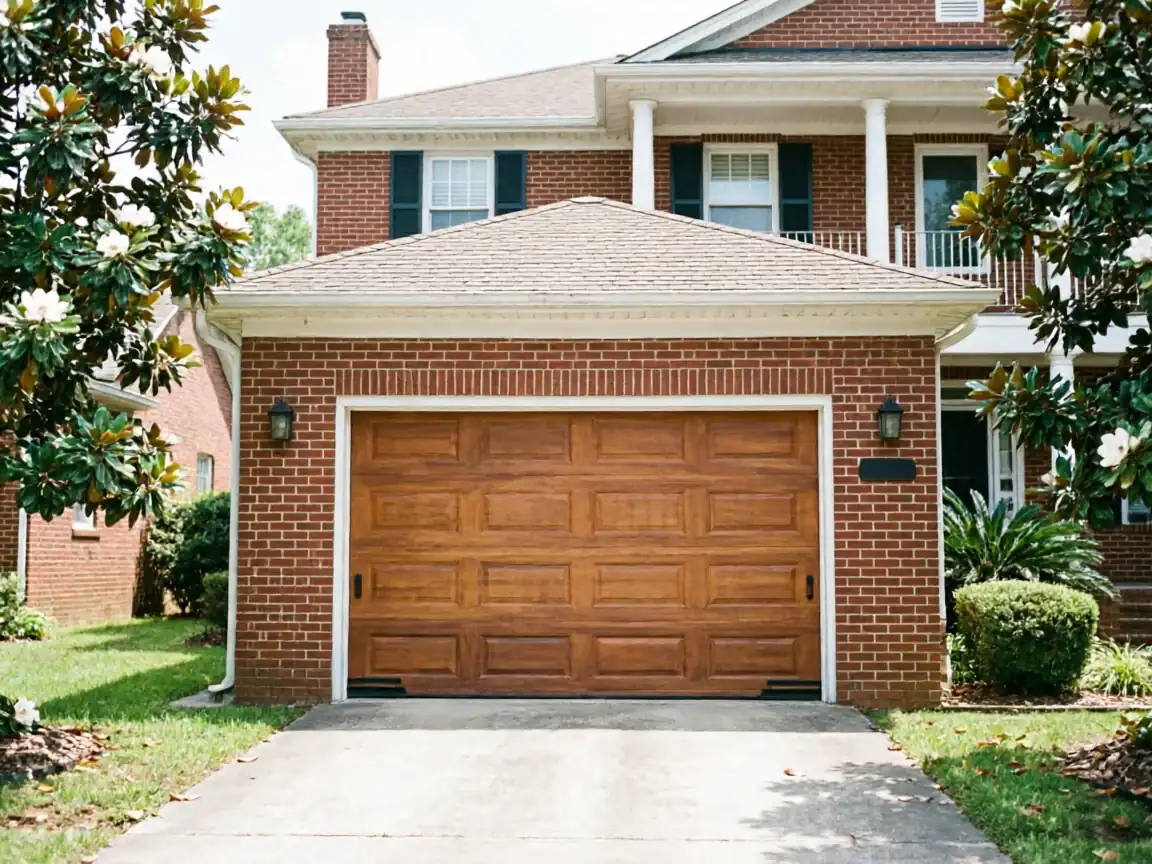
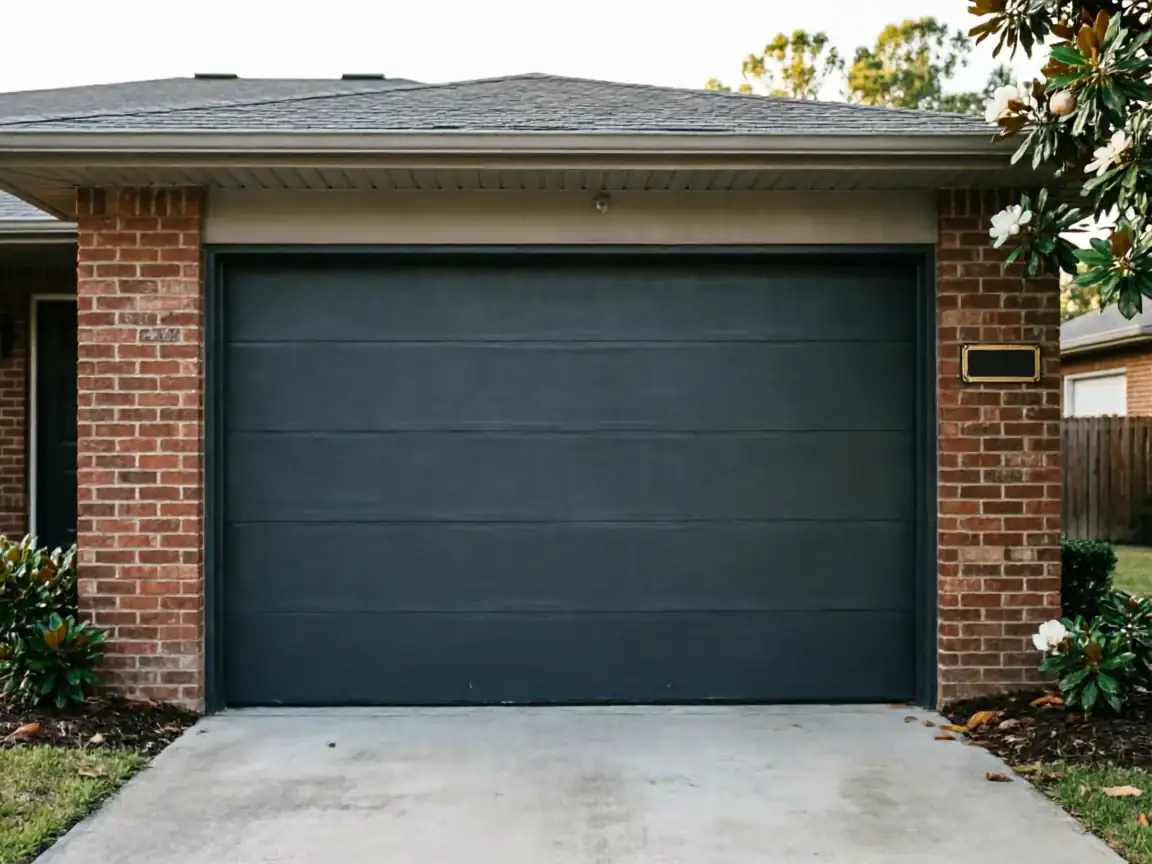
Cayce sits about 10 miles from our shop in Columbia, and the houses here cluster around a different build year than a lot of the rest of the service area. The median home in Cayce went up around 1970, which puts most garages here squarely in the early-torsion-spring era, before the lighter steel panels and plastic-encased rollers that showed up in later remodels. Across the wider Columbia service area the housing stock runs from 1965 up through 2010, with a median closer to 1979 - so Cayce skews a few years older than the area average, not newer. That matters for a garage door because the hardware installed in a 1970 build is not the hardware installed in a 2005 build, even if both doors look the same from the driveway. With roughly 6,621 households in Cayce, there's a sizable run of these original setups still in daily use, some untouched since the house was framed, some patched piecemeal over fifty years by whoever was around at the time.
How That Shows Up in the Door
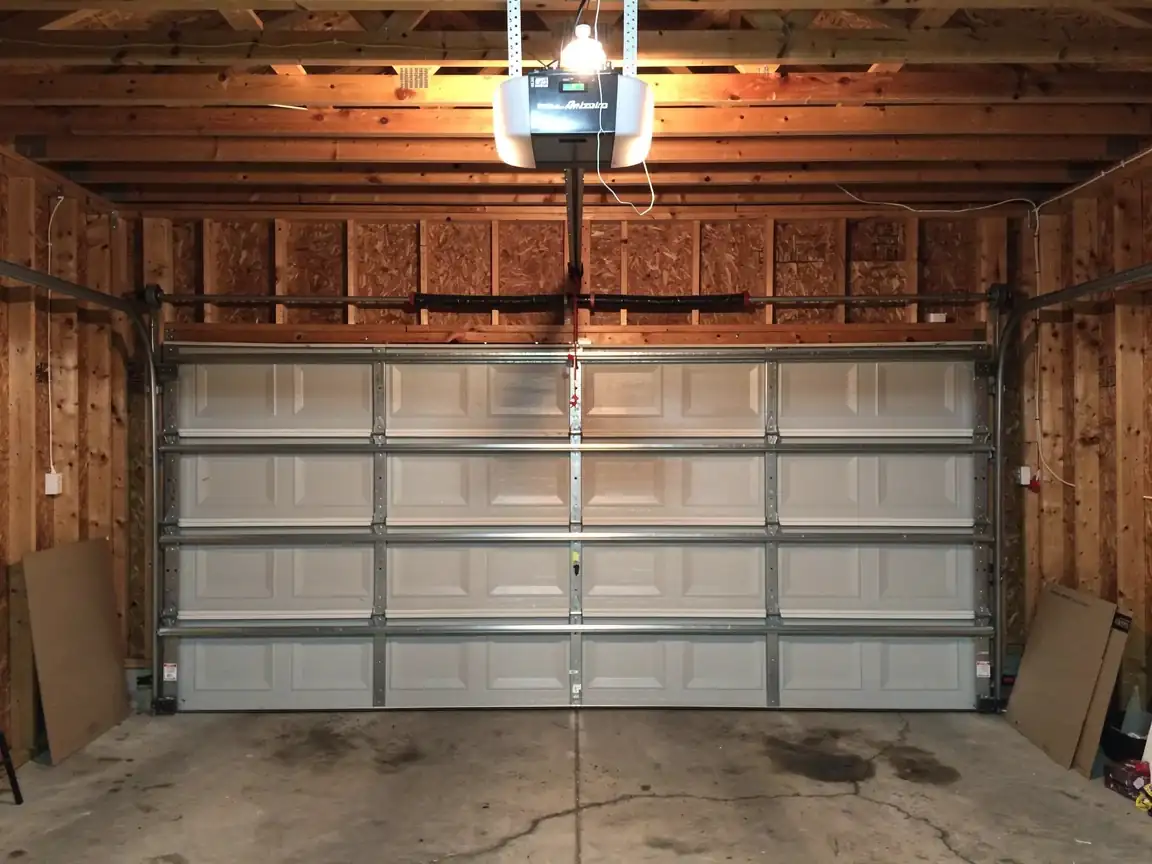
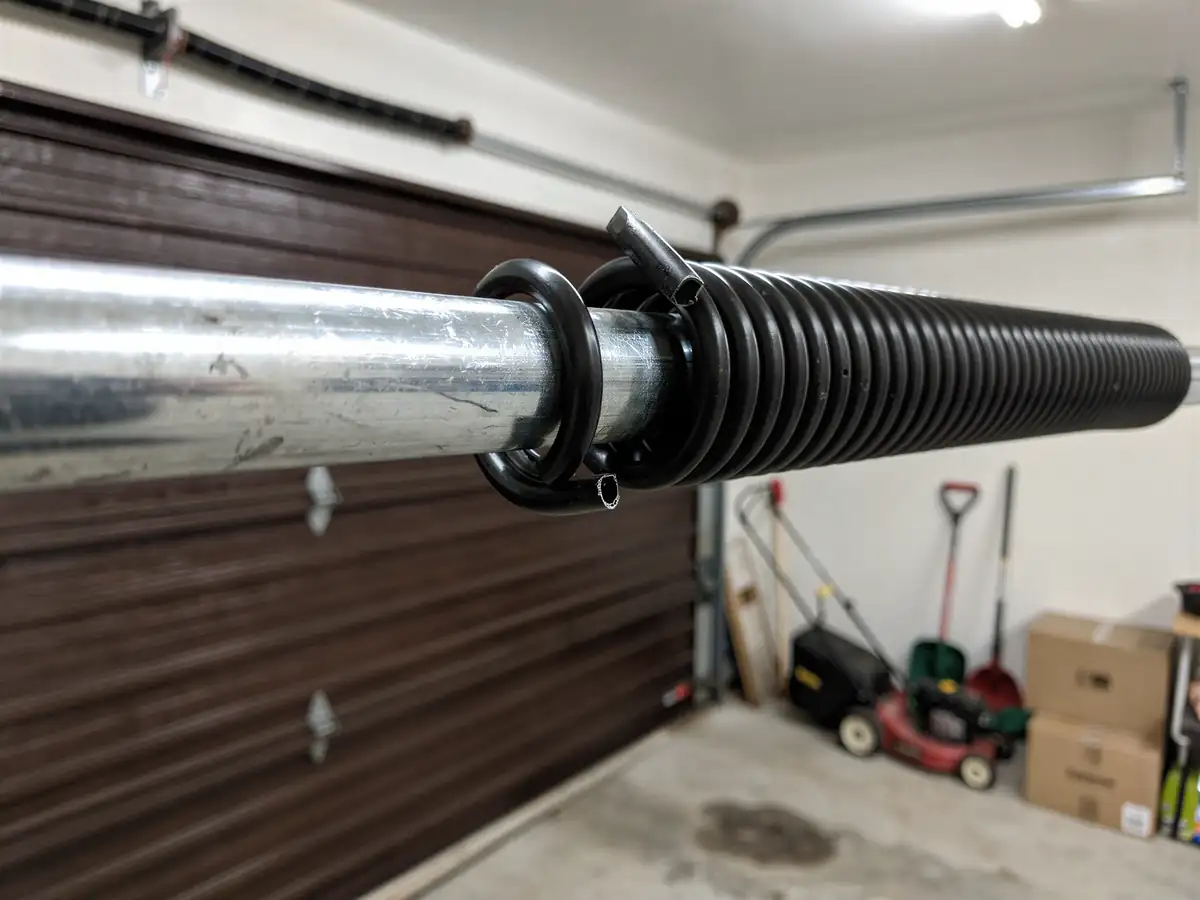
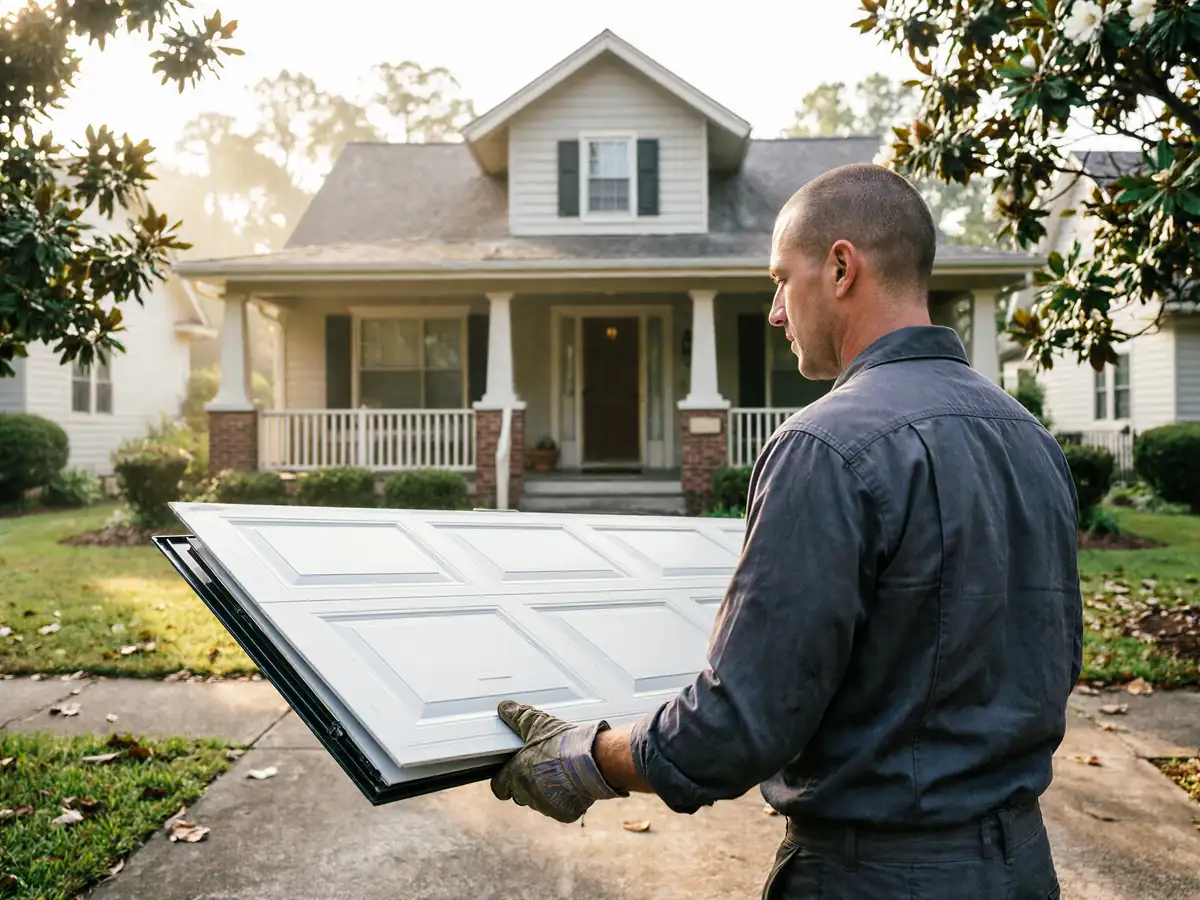
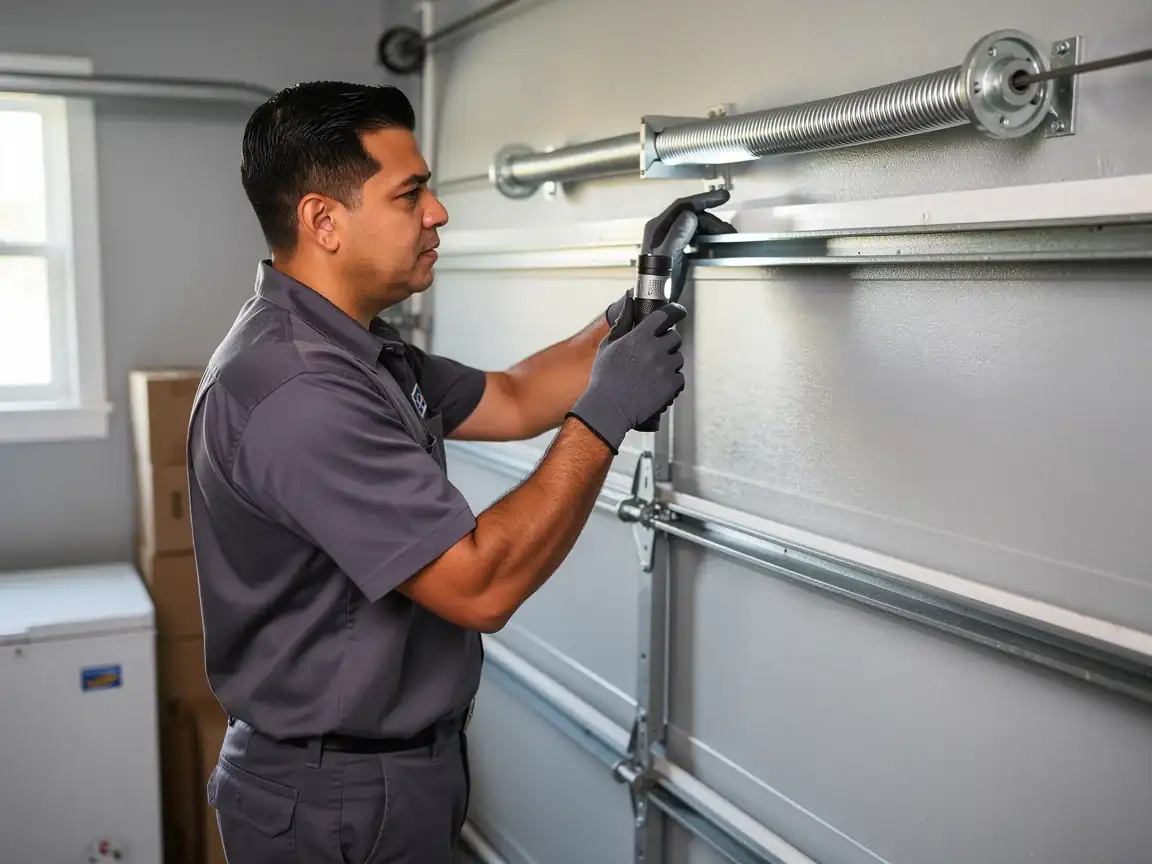
A door from around 1970 usually means a heavier single-layer steel or wood-composite panel, hung on a torsion spring sized for that extra weight, with hinges and track brackets that have seen five decades of South Carolina winters. The region sits in a cold-moderate climate band - not brutal, but enough freeze-thaw cycling over fifty-plus years to work steel fatigue into springs and loosen lag screws in jamb brackets that were never meant to last this long. We see springs that are original to the house, sized by a formula nobody follows anymore, and track that's been re-shimmed so many times the alignment is more guess than measurement. None of that is unique to one house - it's what a 1970-era garage in this climate does, reliably, over time.
What People Here Ring About
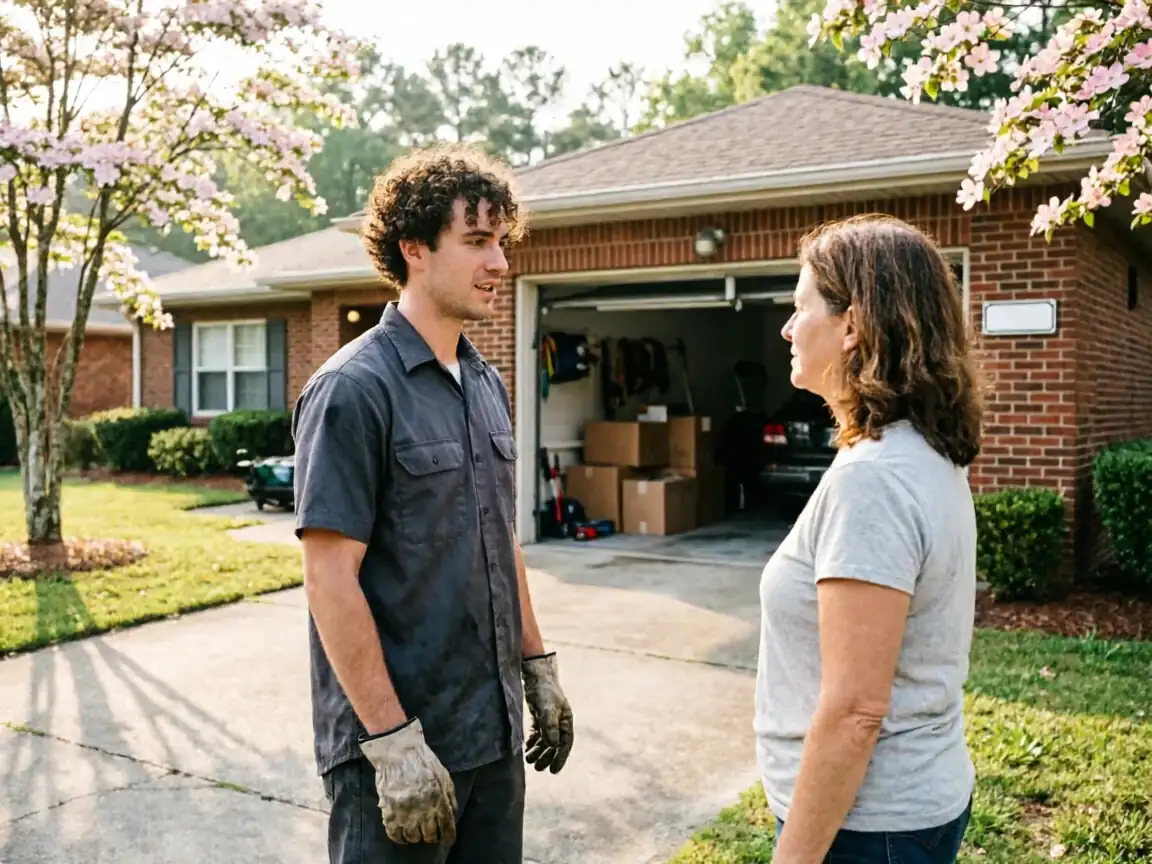
The calls from Cayce tend to be springs that finally let go after years of slow fatigue, rollers that have worn their track grooves wider than spec, and openers bolted to framing that was never reinforced for the weight of today's replacement motors. With a median household income of $58,095 in Cayce - a bit below the service area's $60,408 - we also hear from owners trying to decide whether a repair is worth it versus letting a forty-year-old door finally retire. We don't push either answer; it depends on what's actually failing versus what's just old.
What We Will Not Take On
We travel out from Columbia to reach Cayce, so we don't keep a local depot or stock here, and any specialty panel for a discontinued 1970s-era door line may mean a wait while we source the part. If your garage was converted into living space without the structural header a door opening needs, that's a carpentry job before it's a door job, and we'll tell you that straight rather than bolt new hardware to a wall that can't carry it.
How it works
From “it’s stuck” to “it’s fixed”
01
Tell us what’s wrong
Describe the symptom - won’t open, loud bang, opener runs but the door won’t move.
02
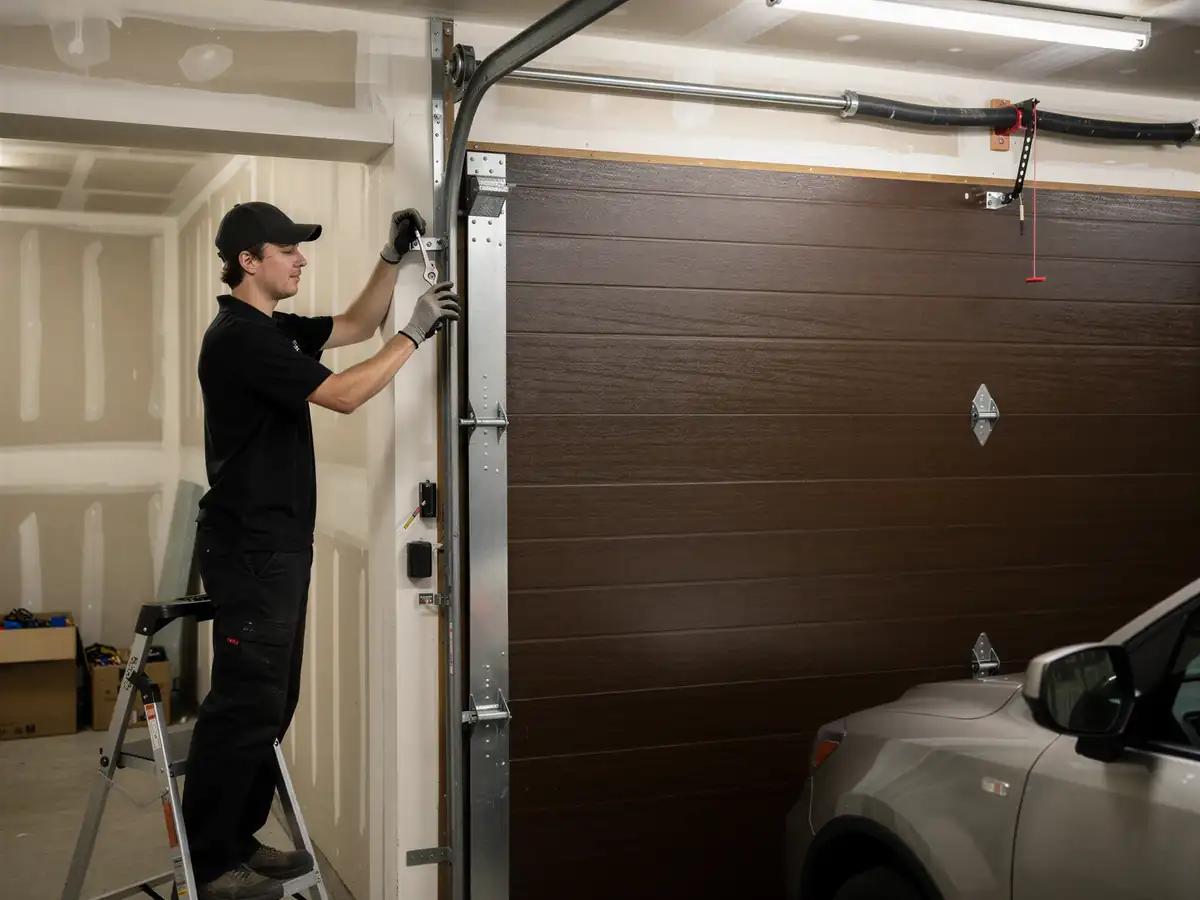
On-site diagnosis
A technician tests the door under power and by hand and finds what actually failed.
03
Clear, up-front plan
You get the fix that’s needed and what drives the cost - before any work starts.
04
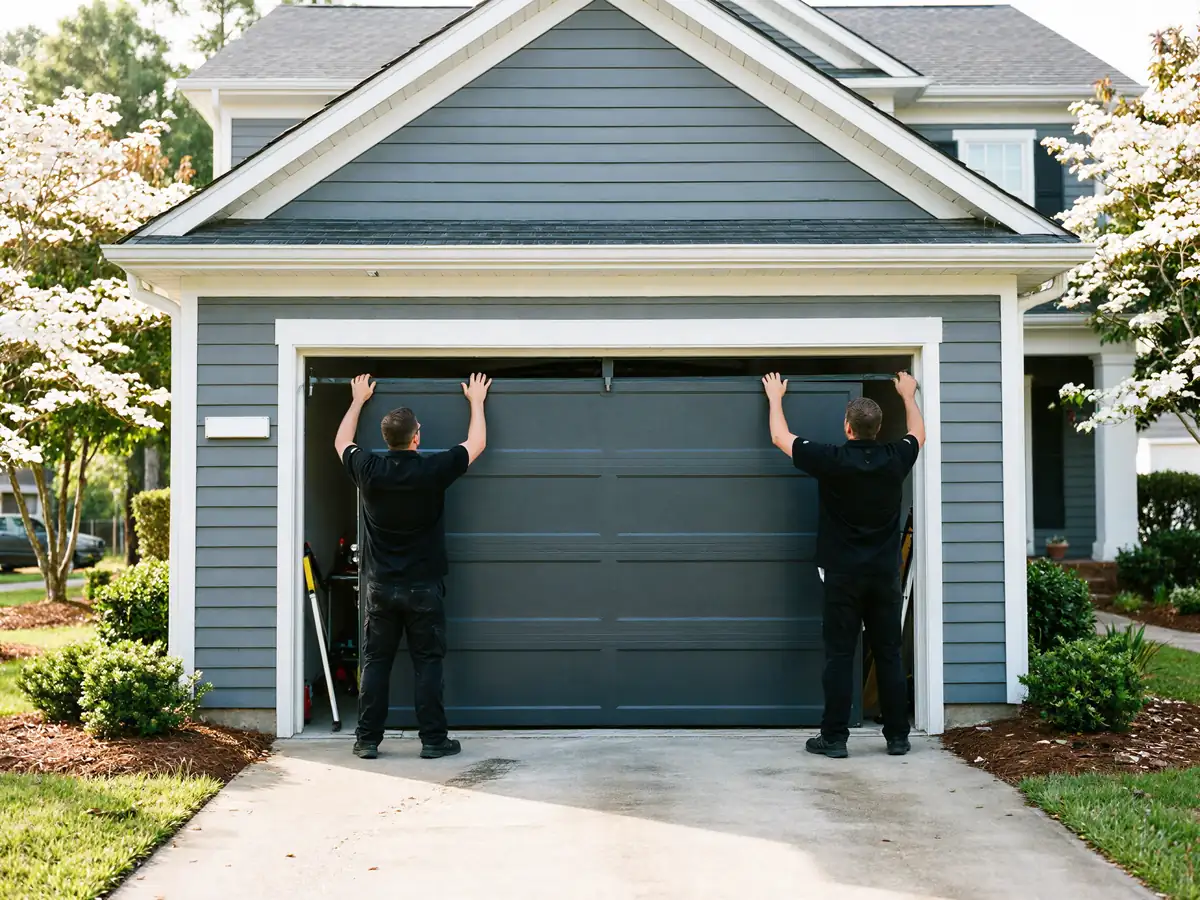
Repaired & tested
The repair is done, the door is set true and tested, and the work area left clean.
Not sure which repair your door needs in Columbia, SC? Describe what it’s doing - every job starts with a diagnosis.
Why does my 1970s garage door in Cayce need a different spring than a newer house?
Doors built around that era are often heavier single-layer steel or composite panels, and the torsion spring was sized for that weight using an older formula. Swap in a modern lightweight panel without re-rating the spring and it either over-lifts or wears out early. We size the spring to the door you actually have, not a generic chart.
Do you have a shop in Cayce?
No. We run out of Columbia and travel to Cayce, about 10 miles away, for service calls. We don't keep a depot or stock on-site in Cayce, so an unusual part for an older door may take extra time to source before the job gets finished.
Is it worth repairing a door this old or should I replace it?
Depends what's failing. A worn spring or roller set on an otherwise sound door is usually a straightforward repair. If the panel itself is rusted through or the track brackets have pulled loose from rotted framing, replacement often makes more sense than chasing repeated fixes.