Serving Columbia, SC & nearby
(803) 450-4574
Columbia, SC

Garage Door Repair for Cayce's 1970s Doors

Cayce homes built around 1970 carry original steel doors and extension-spring hardware that's aged out. We travel from Columbia to fix what that era left behind.

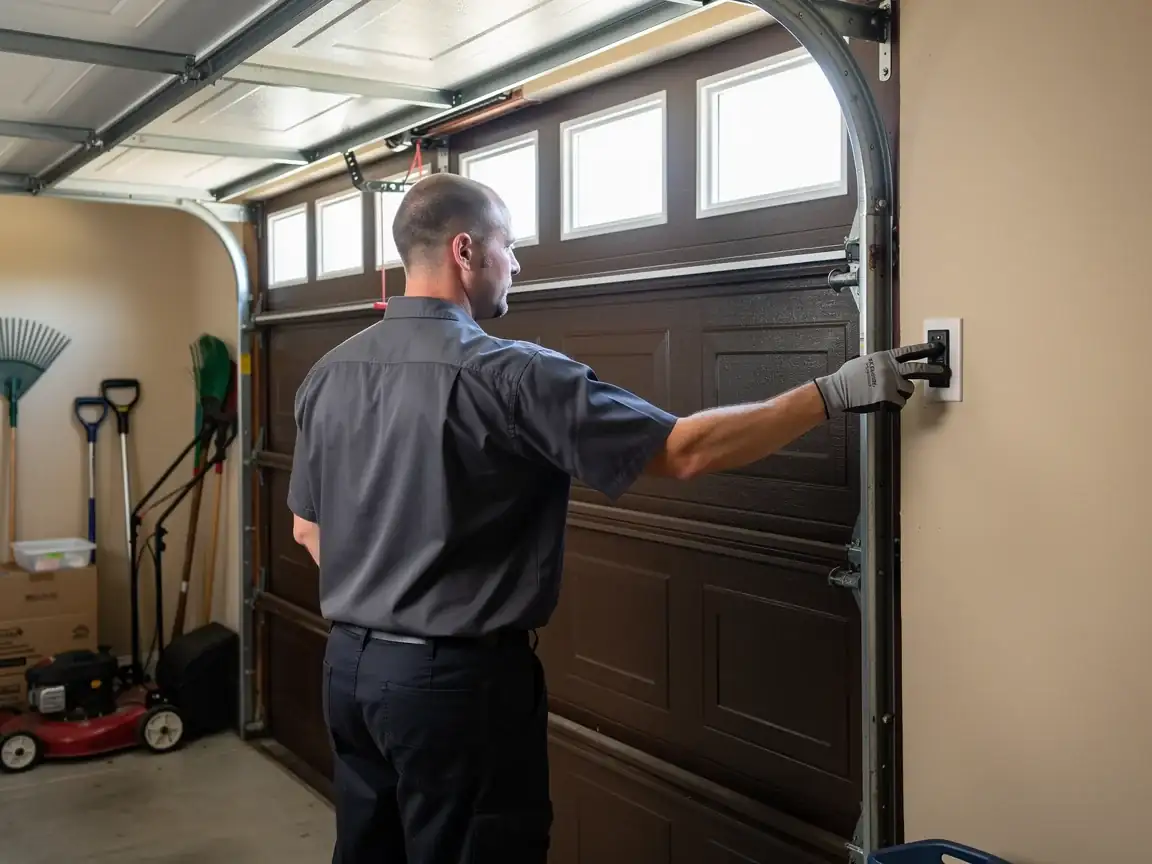
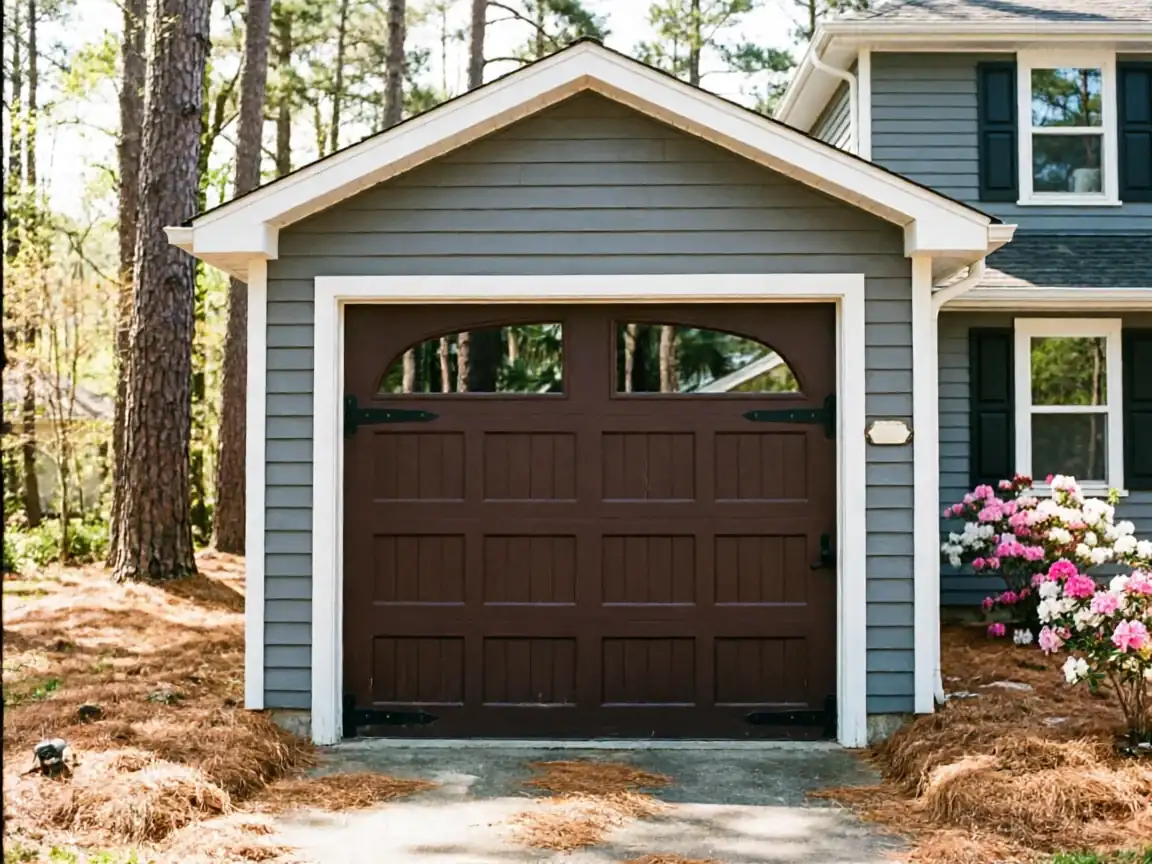
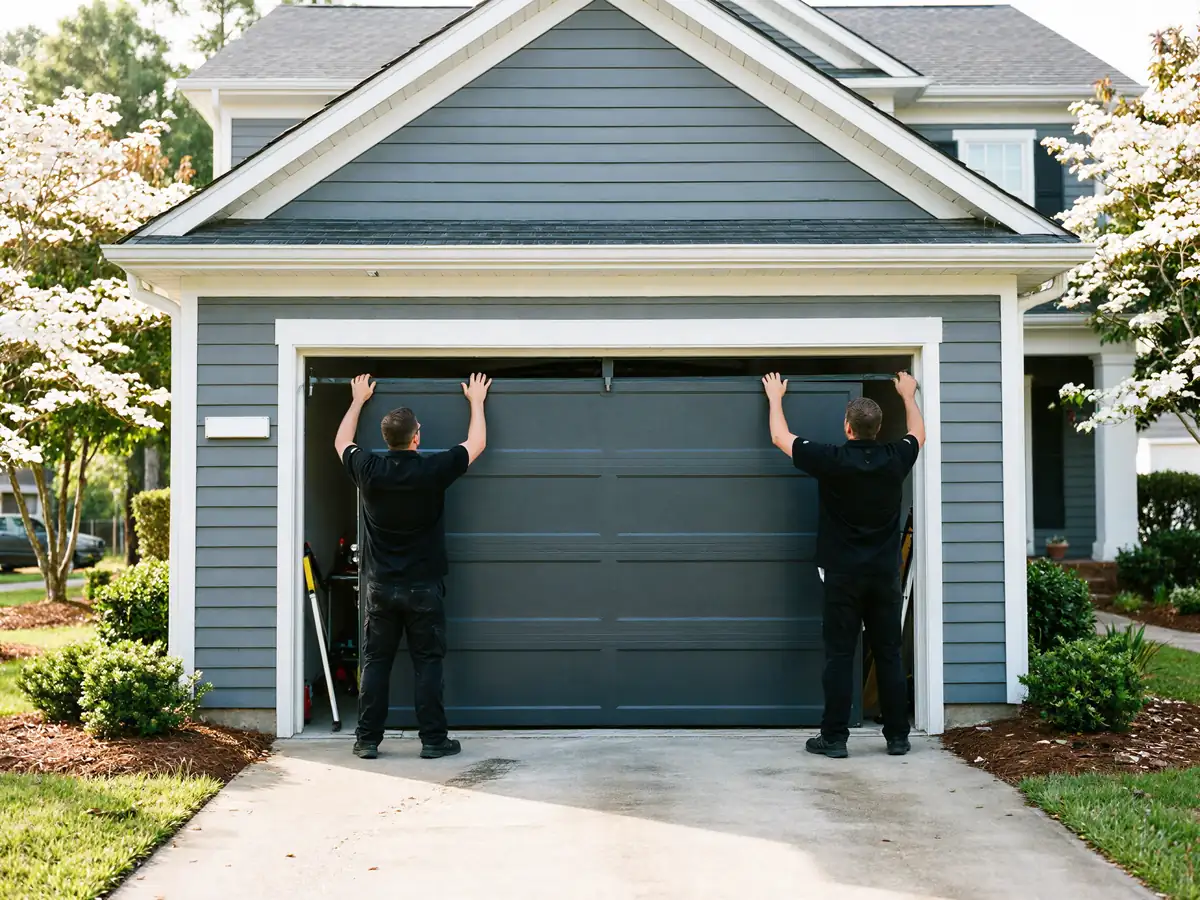
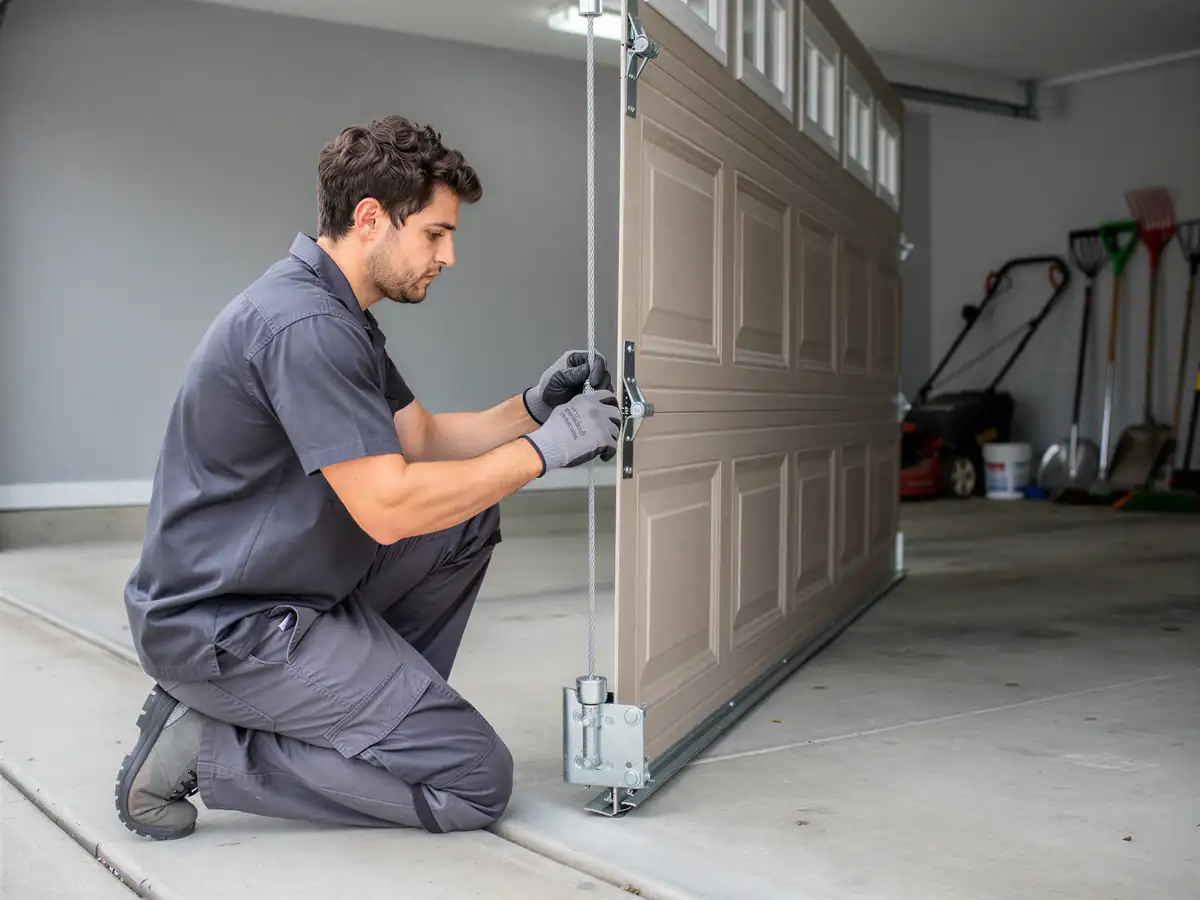
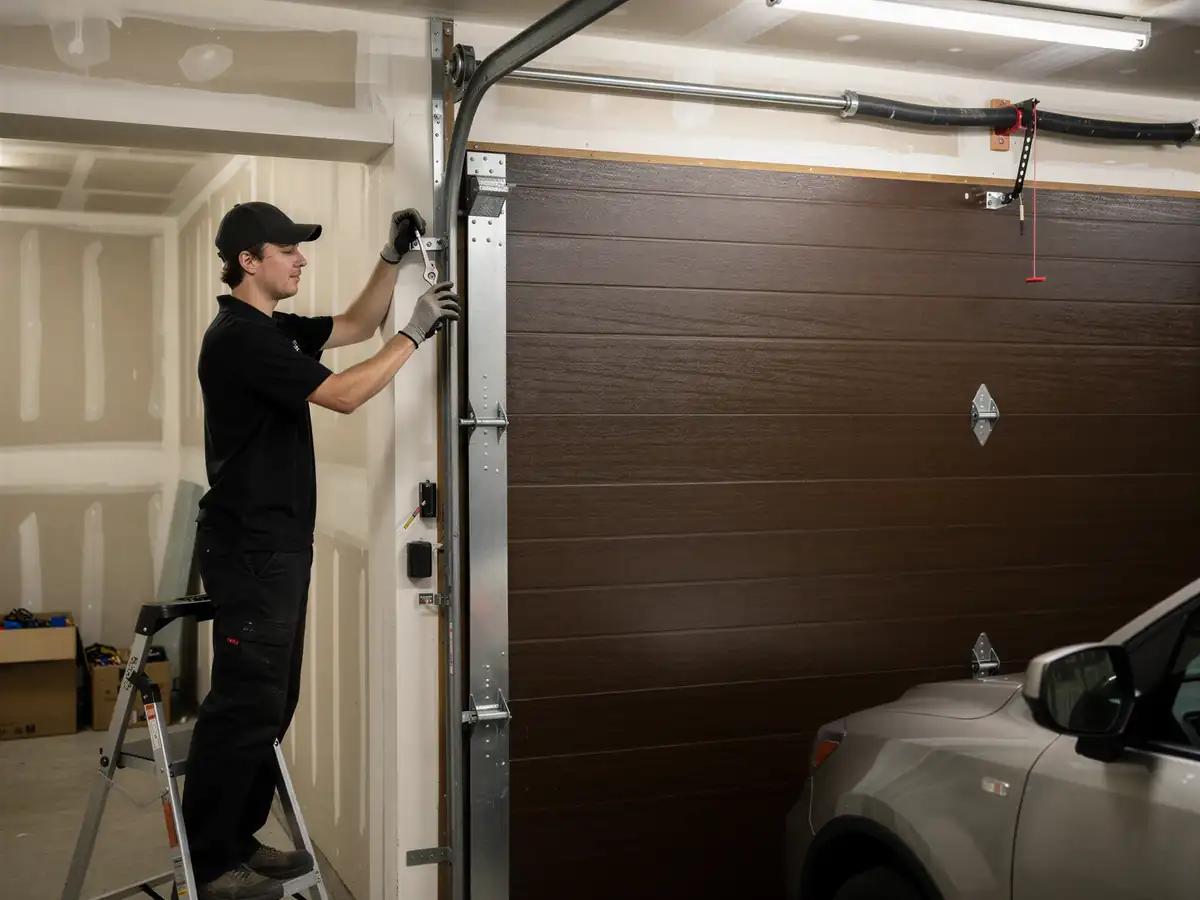
A technician on a ladder adjusts the garage door track next to a brown garage door.
Columbia, SC
8 services
5 service areas
Diagnosis first, then the fix

How to Book

We're based in Columbia and drive the 10 miles into Cayce for repair calls. There's no branch office here, so when you call, tell us the door's age if you know it and what it's doing (or not doing) - that alone tells us whether to bring torsion spring stock or extension cable stock on the truck. Most Cayce homes we see were built close to 1970, and that one detail changes what's in the van before we ever pull into the driveway. Booking is the same as it is for the rest of the service area: we schedule the visit, diagnose on site, and quote before any work starts. We don't keep a Cayce-specific crew or hold parts locally - it's one company working out of Columbia, covering the surrounding towns including this one. If your door is still under a builder-grade warranty from a recent replacement, mention that too, since it can change what we're allowed to touch.limitation: we can't promise a same-day slot purely because you're close to Columbia; routing depends on the day's calls across the whole area.

What You Are Seeing

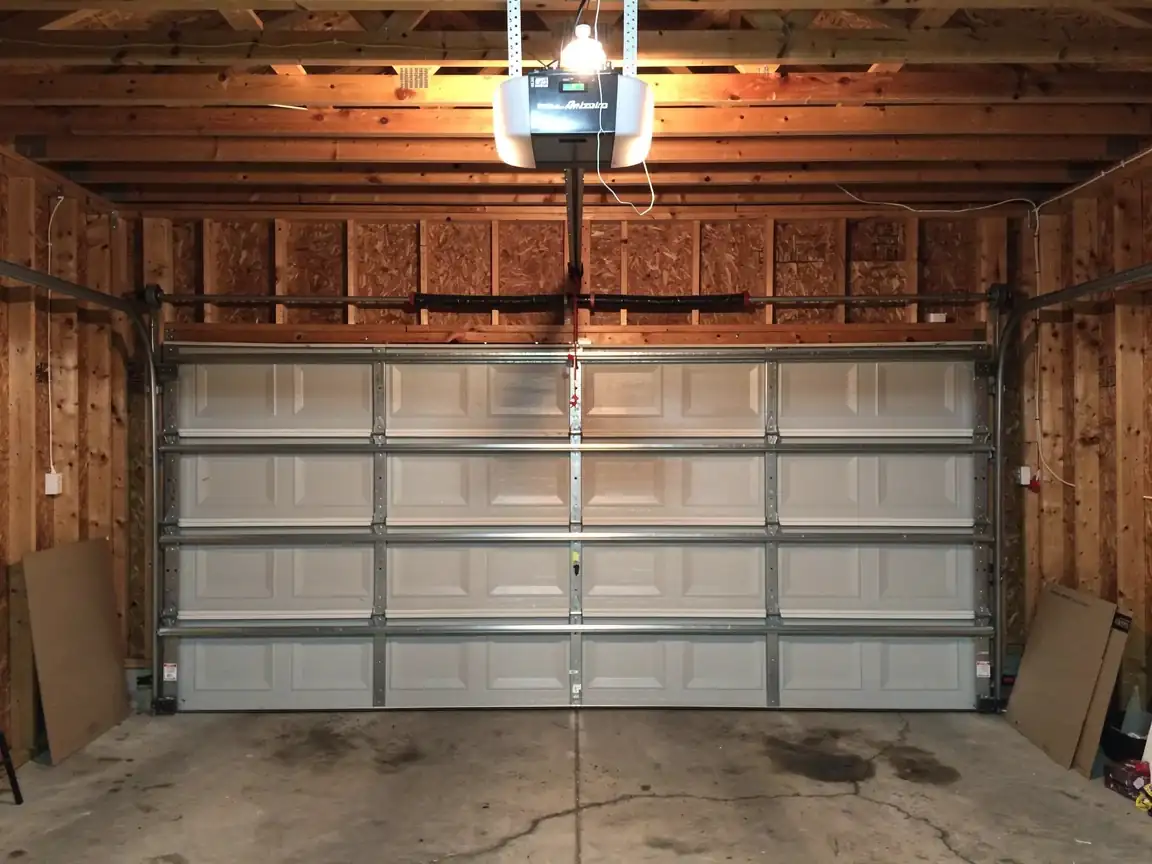
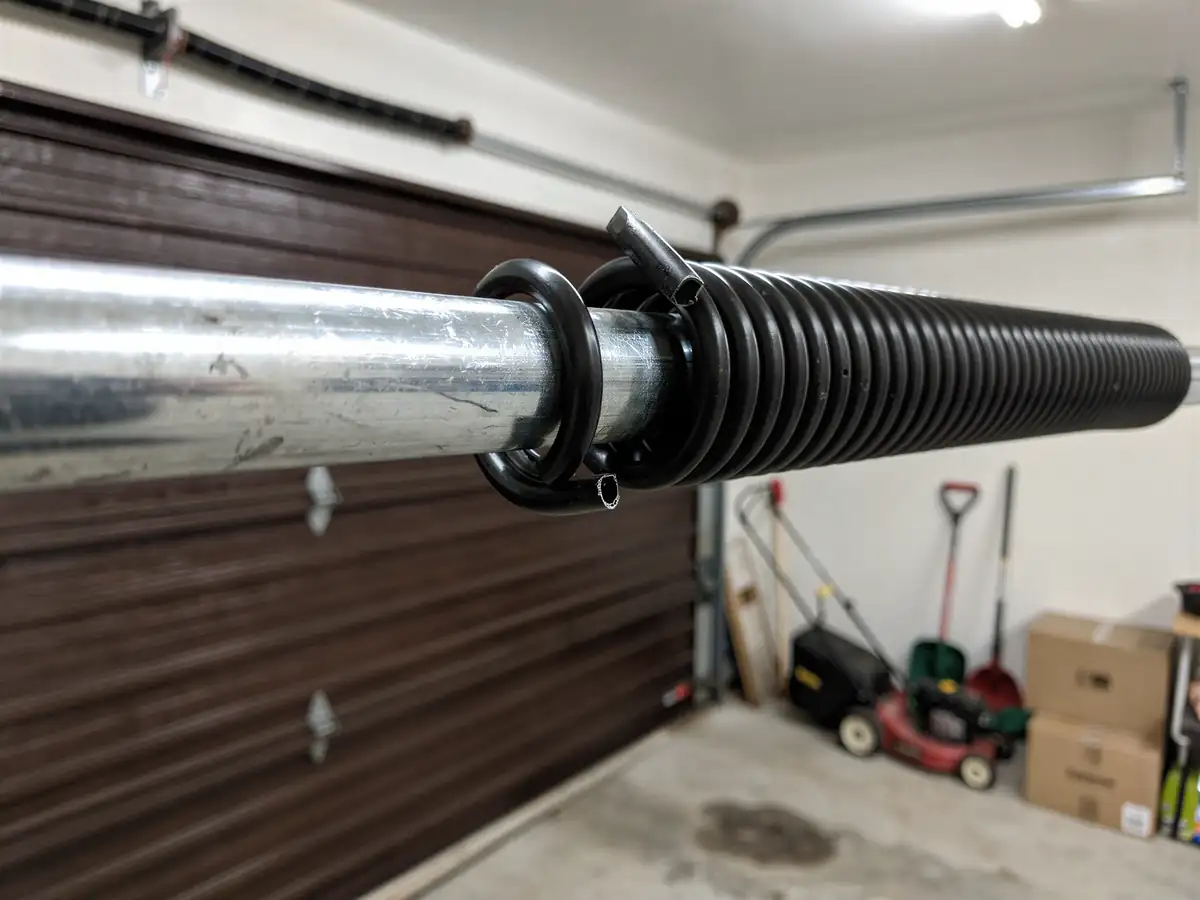
A door built around 1970 in this part of the Midlands is almost always a steel section door, not the heavier wood doors you'll find on older homes closer to downtown Columbia. These were single-layer steel, no foam core, hung on extension springs mounted along the horizontal tracks rather than a torsion bar over the opening. Fifty-plus years in, the steel itself is often fine - it's the hardware that's failed. You'll see a sagging door that won't sit flush, stretched or frayed safety cables along the track rails, or a spring with gaps pulled wide between the coils. On a single-car opening that's roughly 9 feet wide, one weak extension spring is enough to throw the whole door off balance, and you'll feel it as a heavier-than-it-should-be pull on the release handle or a door that drops fast the last foot of travel. None of this shows up as rust holes or dents - it shows up as a door that just doesn't move right anymore.

Can You Do This Yourself

Extension springs are the one piece of this job where a homeowner can safely do more than with torsion hardware - there's less stored tension to manage, and swapping a cable or a pulley is within reach for someone comfortable with basic tools. Where it stops being a DIY job is the spring itself. A stretched extension spring is still under load, and the galvanized coil can let go without warning while you're working near it. If the door is a double, 16 feet wide, both springs need replacing at the same time even if only one has failed, and lining up two springs to equal tension by eye is where most home repairs go wrong and the door ends up crooked. Track alignment on a door this age is another place to stop: the rails have likely shifted slightly over five decades of settling, and bolting a new bracket to an out-of-square track just moves the problem. If you're not sure which side of that line you're on, it's worth a call before you start.

The Complications

The standard complication with doors from this era isn't the door - it's everything attached to it. A 1970-built opening in Cayce was almost never engineered for an automatic opener; those got added later, often by a previous owner, bolted onto a door frame that was never designed to carry that load. We regularly find openers mounted to headers that have started to pull away from the jamb, which means the repair isn't just the spring or the opener, it's reinforcing what's behind it. Humidity across this part of South Carolina also plays a role: steel track brackets that were fine for the first 30 years start showing surface corrosion at the mounting bolts, and a bolt that looks solid can strip the moment you put a wrench on it. None of this is unique to one house - it's close to universal across the 1965-2010 housing stock that makes up most of the area, with the older end of that range concentrated right where Cayce sits.

Parts We Carry

Because so much of what we see in Cayce is extension-spring hardware from the 1960s-70s building wave, we stock extension springs in the common residential weights, replacement safety cables, and the stamped steel pulleys that wear out alongside the springs. We also carry torsion conversion hardware for homeowners who want off extension springs entirely - a reasonable call on a door that's thrown a cable more than once. For the steel panels themselves, exact-match replacement sections for a door this old usually aren't available; manufacturers don't keep 50-year-old profiles in production. Where a single panel is dented but the rest of the door is sound, we'll tell you honestly whether a close-enough replacement panel is worth it or whether the mismatch will bother you every time you pull in. Openers get swapped more often than repaired at this point, since parts for units old enough to have shipped with a house like this are harder to source than the unit itself.

How We Fix It

On a sagging or off-balance door, we start by checking both extension springs' coil gap and the cable condition before touching anything else - on a 16-foot double door both springs come off together if either has stretched past spec. We re-tension or replace, reset the track brackets to level since five decades of settling rarely leaves them square, and check the header where the opener mounts for any separation from the framing. If the header's compromised, that gets reinforced before we reinstall the opener bracket - putting a working opener back on a weak header just sets up the next failure. We test full-cycle balance by hand before we hand the door back to the opener, since an opener fighting an unbalanced door burns out its drive gear early. Where the steel panels themselves are sound, this is usually a hardware-and-bracket job, not a full door replacement, which keeps the cost down for a lot of the 1970-era doors we see out here.
How it works

From “it’s stuck” to “it’s fixed”

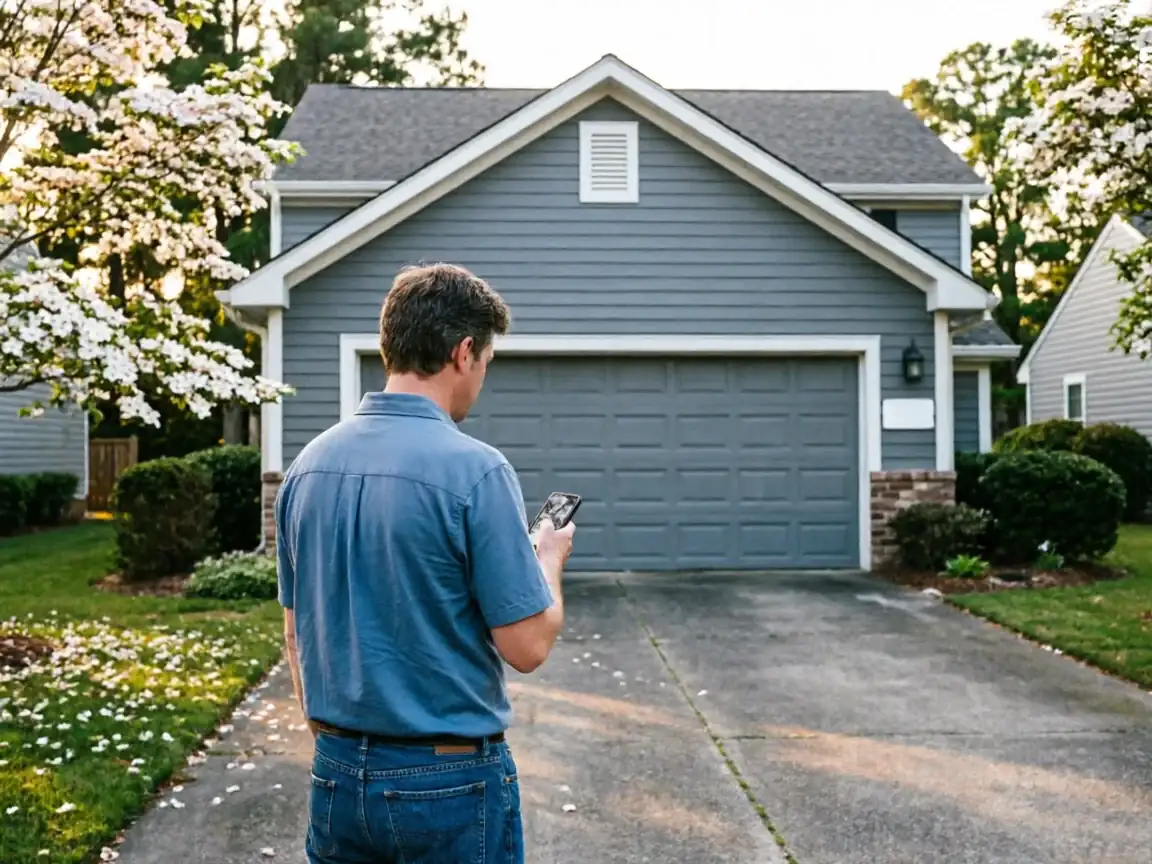
A man in a blue shirt stands in a driveway looking at his phone.

Tell us what’s wrong

Describe the symptom - won’t open, loud bang, opener runs but the door won’t move.

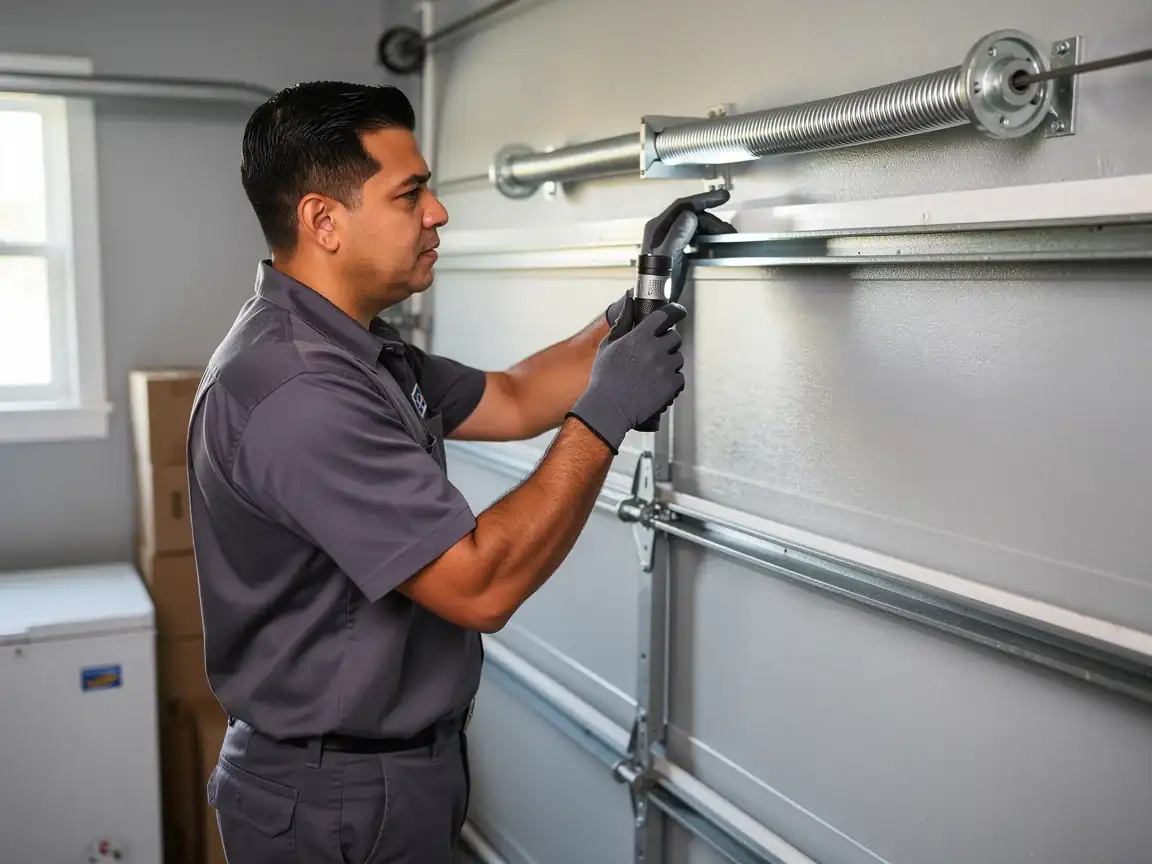
A technician holds a flashlight and works on a garage door torsion spring.

On-site diagnosis

A technician tests the door under power and by hand and finds what actually failed.

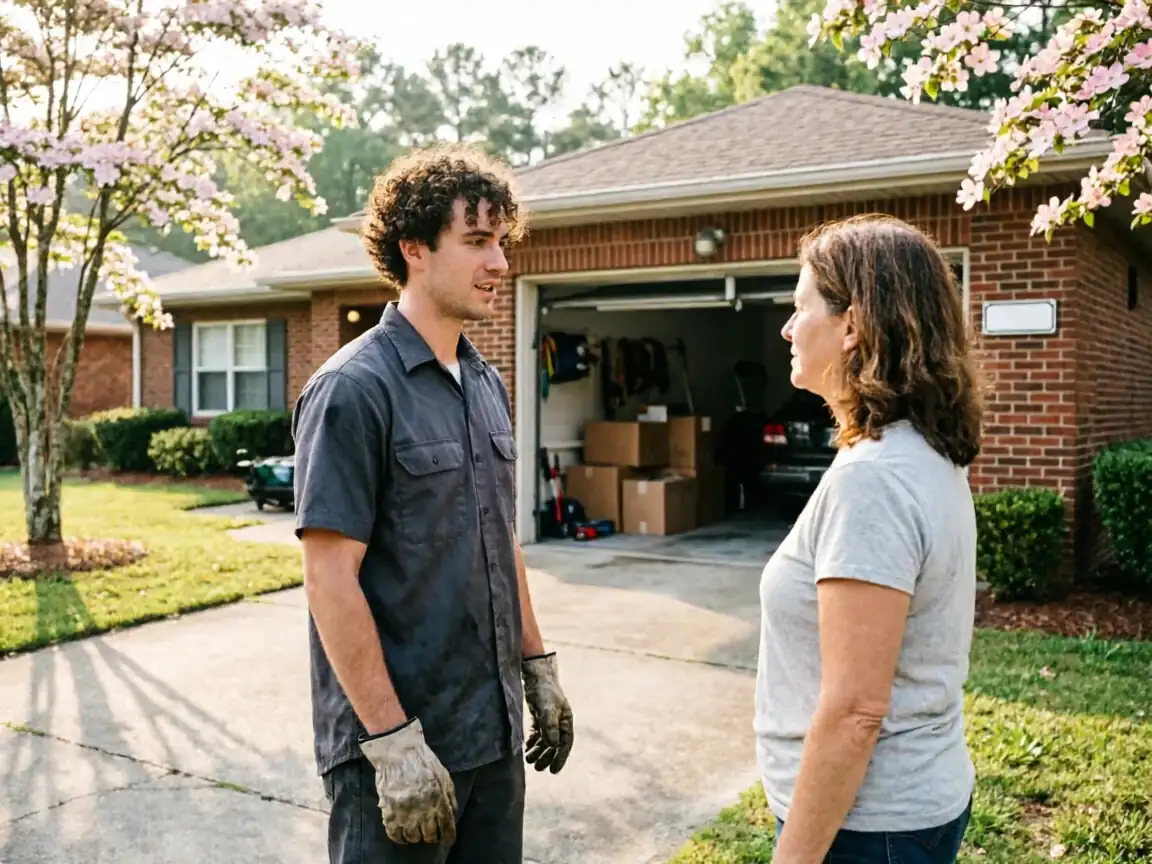
A technician in work gloves talks to a woman in front of a brick house.

Clear, up-front plan

You get the fix that’s needed and what drives the cost - before any work starts.

A technician in a gray shirt presses a button on a wall next to a brown garage door.

Repaired & tested

The repair is done, the door is set true and tested, and the work area left clean.

Not sure which repair your door needs in Columbia, SC? Describe what it’s doing - every job starts with a diagnosis.

How we work

What to expect

A straight, honest approach on every Columbia job - diagnosis first, the right parts, and clean work.

01

Diagnosis first

Every visit starts by finding what actually failed - not a pre-written parts list.

02

The right part for the door

Springs and openers matched to the door’s weight and age, so the fix holds up.

03

Straight answers

When a repair makes more sense than a replacement - or the reverse - you hear it plainly.

04

Clean, careful work

Tension released safely, hardware set true, the door tested under power before we leave.

142,416Residents in Columbia
8Garage door services
5Neighborhoods & suburbs
SCServing Columbia, SC
Questions

Frequently asked

Straight answers about garage door repair in Columbia. Still unsure? Ask us directly.

Why does my garage door from around 1970 use different springs than newer houses?

Torsion spring systems mounted above the door became the residential standard later; houses built around 1970 in this area were typically built with extension springs running along the horizontal tracks instead. Both work fine when maintained, but extension systems need safety cables that torsion systems don't, and those cables are usually the first thing to fail.

Is it worth replacing the whole door or just fixing the hardware?

For most of the 1970-era steel doors we see here, the panels themselves hold up fine and the failure is in the springs, cables, or track brackets. If the steel is dented or rusted through, replacement makes more sense than chasing panel matches that don't exist anymore. We'll tell you which situation you're in before quoting.

Do you have a local office in Cayce?

No. We're based in Columbia and drive out to Cayce for calls, about 10 miles each way. There's no separate branch or depot here, so scheduling depends on the day's route across the whole service area, not just proximity.

Can I replace just one extension spring if only one broke?

You can, but it's not a good idea on a double door. The springs stretch together over time, so even if one hasn't snapped, it's close behind. Replacing both at once keeps the door balanced and saves you a second call in a few months.

Ready to get your garage door sorted?

Request a QuoteCall